

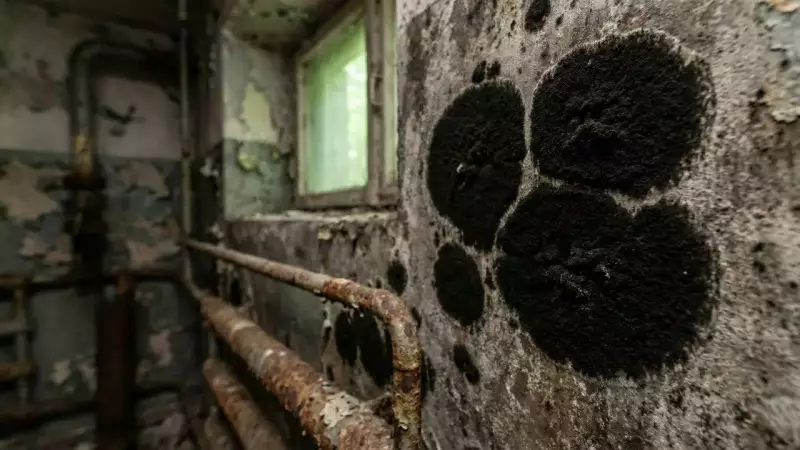
In a stunning display of nature's resilience, a bizarre black fungus discovered growing inside the radioactive ruins of the Chernobyl nuclear reactor is capturing the imagination of scientists worldwide. This organism doesn't just survive extreme radiation; it appears to be drawn to it. Now, researchers from NASA, Stanford University, and the Albert Einstein College of Medicine are investigating whether this remarkable mould could be the key to protecting future astronauts on perilous missions to Mars.
The Radioactive Discovery in Chernobyl's Heart
The story begins in 1997, when Ukrainian mycologist Nelli Zhdanova ventured into the damaged Chernobyl reactor. She found walls, ceilings, and even metal conduits coated with a strange black mould. Her survey identified 37 different fungal species, many darkened by melanin. The most dominant species, Cladosporium sphaerospermum, exhibited a behaviour Zhdanova termed 'radiotropism'—it seemed to grow towards sources of radioactivity, as if seeking it out.
The secret appears to lie in melanin, the same pigment that colours human skin and protects against sunlight. In these fungi, melanin plays a far more active role. In 2007, nuclear scientist Ekaterina Dadachova found that melanised fungi exposed to radioactive caesium grew roughly 10 percent faster than those kept in a radiation-free environment. This led to the groundbreaking theory of 'radiosynthesis'—a process where melanin might convert ionising radiation into chemical energy, akin to how plants use sunlight in photosynthesis.

This adaptation isn't unique to fungi. Within the Chernobyl Exclusion Zone, tree frogs have evolved to be noticeably darker, suggesting melanin provides a crucial survival and evolutionary advantage in highly contaminated environments.
Scientific Caution and Unanswered Questions
Despite the exciting observations, scientists urge caution. Researchers like Nils Averesch of Stanford University point out that there is still no definitive proof the fungus "feeds" on radiation. While it clearly thrives in high-radiation settings and melanin behaves uniquely under ionising rays, the exact biological mechanism remains a mystery. Some studies, including a 2022 report from Sandia National Laboratories, found no growth difference in tested fungi, keeping radiosynthesis firmly in the realm of theory for now.
A Shield Born in Space: The ISS Experiment
The fungus's potential took a giant leap forward in 2018 when samples were sent to the International Space Station. For 26 days, the organism was bathed in cosmic radiation far more intense than Earth's. The results were extraordinary:
- The fungus exhibited accelerated growth in space.
- A thin layer of the mould successfully blocked a portion of the incoming cosmic radiation.
- Sensors placed behind the fungal sample recorded measurably lower radiation levels.
This experiment proved the fungus could act as a living, self-replicating radiation shield. While microgravity may have contributed to growth, the shielding effect was undeniable.
Why Mars Missions Desperately Need This Solution
Radiation is arguably the single greatest threat to astronauts on a journey to Mars. The Red Planet lacks a global magnetic field and has a thin atmosphere, offering little protection from relentless cosmic rays that can damage DNA, increase cancer risk, and harm cognitive function. Traditional shielding, like lead or metal plating, is prohibitively heavy and expensive to launch. A biological shield made of fungus presents a revolutionary alternative: it is lightweight, can grow and thicken itself in response to radiation, and even self-repair.
Scientists envision applying layers of this melanin-rich fungus to spacecraft interiors or even incorporating it into the structure of future Martian habitats.

The Legacy of Chernobyl and a Glimpse of the Future
The Chernobyl disaster on April 26, 1986, created one of the most radioactive environments on Earth. The explosion at Reactor Four and the subsequent fire released massive amounts of radioactive material, leading to the creation of a 30-kilometre exclusion zone. Yet, from this tragedy, an organism with extraordinary properties has emerged.
Whether Cladosporium sphaerospermum truly consumes radiation or merely possesses an unparalleled tolerance for it, its ability to block harmful rays is now a documented fact. For astronauts aiming for Mars, this strange mould from a nuclear wasteland could evolve from a scientific curiosity into a vital piece of survival technology. However, as researchers emphasise, turning this promising idea into a reliable tool for deep-space exploration will require years of dedicated study and experimentation.





