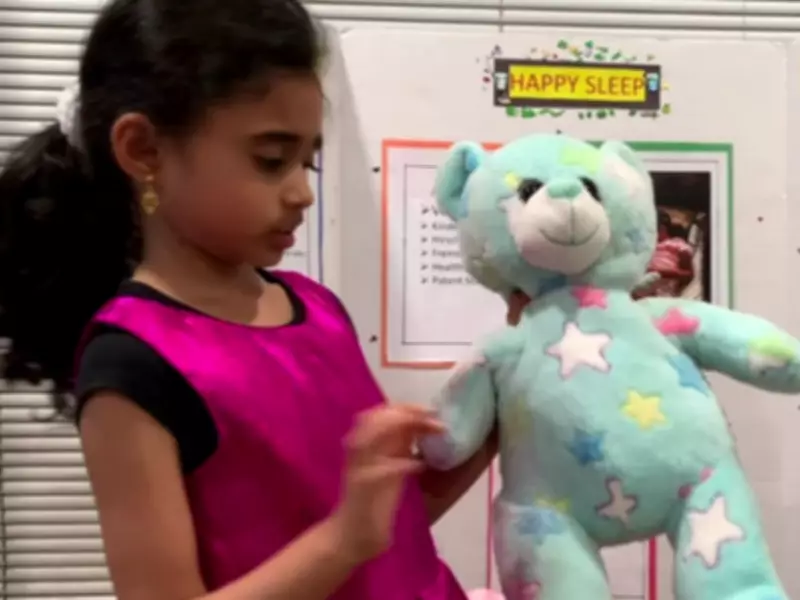
A five-year-old child named Vennela Attili has invented a stuffed doll called Happy Sleep, designed to mimic warmth, breathing, and movement to help children fall asleep independently. The invention was inspired by Vennela's observation of her mother gently patting her back during bedtime, as reported by Patient Innovation.
Addressing a Common Sleep Struggle
Putting children to bed remains a challenge for many families. Many young children struggle with sleep during their early years, which can impact emotions, behavior, and overall family well-being. Happy Sleep aims to respond to this common situation by providing a comforting object that simulates parental presence.
The Power of Familiar Comfort
The innovation leverages children's emotional attachment to transitional objects, such as blankets or soft toys. This familiarity makes the concept easy for families to understand and relate to. Instead of relying on advanced technology, Happy Sleep uses a simple, well-known source of comfort.

Why Breathing and Warmth Matter
Although no independent study has evaluated Happy Sleep specifically, scientific research supports the potential benefits of its features. A 2024 systematic review found that parental involvement in bedtime routines impacts children's sleep, with many children needing parental presence to feel secure. A toy that mimics aspects of parental presence may provide comfort during bedtime.
Pre-sleep arousal is another factor. Higher arousal levels are linked to delayed sleep onset in preschool children. A soft toy offering predictable sensory cues may help reduce alertness, though further research is needed to confirm the effect of specific products.
The Rise of Comfort-Based Sleep Aids
Using sensory cues for comfort is not new. Ongoing research explores the impact of touch, pressure, and temperature on children's sleep. While not directly applicable to breathing dolls, studies show increasing interest in non-medication approaches to improve sleep. Body temperature regulation is also linked to sleep quality, providing evidence why warmth is considered comforting.
Safety Considerations
Specialists emphasize that sleep-related innovations for children must consider age-appropriate safety measures. Infants should not sleep with pillows or stuffed animals due to choking hazards. Safety depends on the child's age, and some innovations may not be suitable for babies.
A Child’s Solution to a Universal Problem
The significance of this story lies not only in the inventor's age but in the problem she addressed. Difficulty falling asleep is a global issue, and the concept of a stuffed animal friend is relatable to most children. Regardless of future studies, this invention stands out for combining innovation with emotional satisfaction. It highlights a child recognizing a common problem and finding a creative solution.