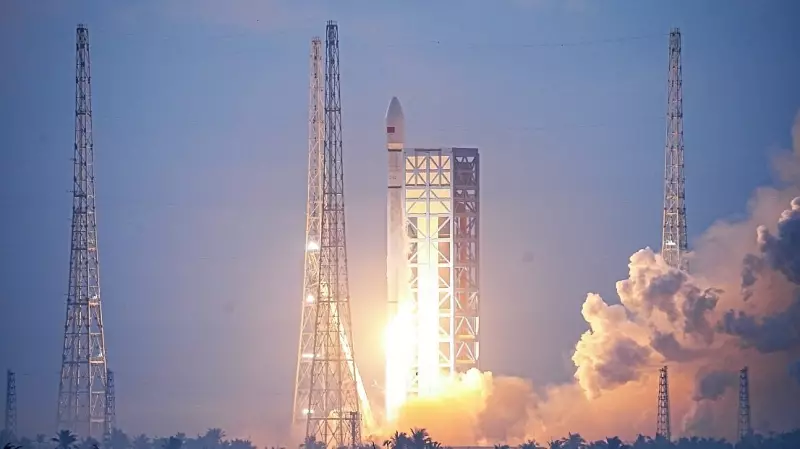
China has faced another significant setback in its ambitious space program, with its second attempt to successfully complete a test of a reusable rocket ending in failure. The latest incident underscores the technical challenges involved in mastering the complex technology required for reusable launch vehicles.
What Happened in the Latest Test?
The test, which took place recently, aimed to demonstrate a key capability: landing and recovering the large lower section of a rocket, known as the first stage or booster, after it completes its job of launching a payload. This marks China's second publicly known failure in attempting to achieve this milestone. Despite launching dozens of successful satellite delivery missions in recent years, the goal of creating a reusable rocket system, similar to those developed by private companies like SpaceX, continues to elude Chinese aerospace engineers.
The Technical Challenge of Reusability
Reusable rocket technology is considered a game-changer in the space industry, as it promises to drastically reduce the cost of access to orbit. The core challenge lies in guiding the massive booster stage back to Earth through a controlled descent and executing a precise, soft landing—often on a drone ship at sea or a designated landing pad. China has yet to successfully complete a reusable rocket test that involves this critical recovery phase. Mastering this technology is crucial for any nation or company aiming for frequent and affordable space launches.

Implications for the Global Space Race
This failure is more than just a technical hiccup; it has broader implications. China's space program has been advancing rapidly, with notable achievements like its lunar missions and the construction of the Tiangong space station. However, the repeated stumbling block with reusable rockets highlights the intense difficulty of this particular engineering feat. It creates an opportunity for other players in the global space arena to maintain or extend their lead in launch cost efficiency. The incident will likely spur further analysis and redesign efforts within China's aerospace sector as it strives to catch up in this pivotal area of space technology.
The pursuit of reusable rockets is a marathon, not a sprint. While this second failure is a disappointment, it is also a common part of the iterative process of aerospace development. The world will be watching closely for China's next attempt to join the exclusive club of nations and companies that have mastered rocket reusability.