

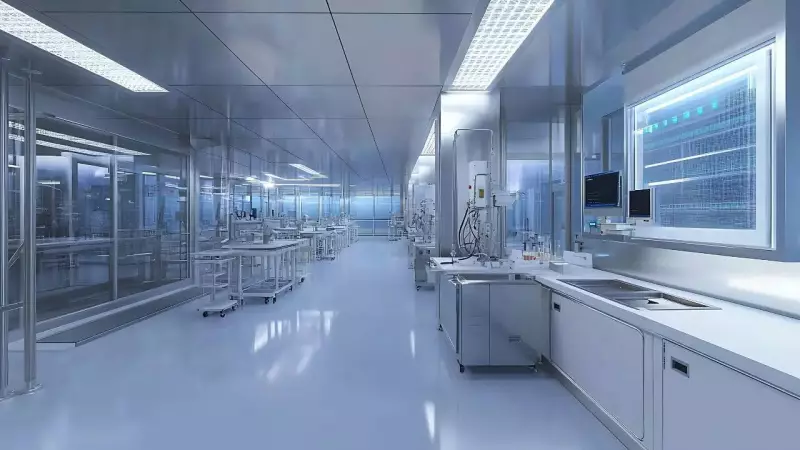
A tiny, resilient bacterium is forcing scientists to rewrite the rulebook on sterility in the world's most secure environments. Discovered in the ultra-clean rooms where spacecraft are assembled, this microbe has exposed a critical blind spot in our ability to detect and eliminate biological contamination.
The Unseen Survivor in NASA's Sterile Fortresses
The organism, named Tersicoccus phoenicis, belongs to the Actinobacteria group. Its discovery story is as intriguing as its behaviour. Researchers independently isolated it from two high-security spacecraft assembly facilities located continents apart: one at NASA's Kennedy Space Center in the USA and another at a European Space Agency launch site. These rooms are engineered to be virtually lifeless to prevent any Earth microbes from hitchhiking to other planets.
According to a pivotal study published in the ASM Journals, this bacterium employs a cunning survival strategy. When faced with the harsh, nutrient-starved and dry conditions of a clean room, it doesn't die. Instead, it shifts into a "viable but non-cultivable" (VBNC) state. In this dormant mode, its metabolic activity drops so low that it becomes invisible to standard cultivation tests, which rely on growing microbes in a petri dish. The research confirmed that nutrient deprivation and prolonged drying trigger this hibernation.

How the Bacterium Cheats Detection and Why It Matters
The stealth of Tersicoccus phoenicis is profound. During experiments, standard tests showed a drop in colony-forming units, suggesting successful sterilization. However, microscopic analysis told a different story: the total number of cells remained unchanged. They had simply stopped dividing. Scientists were able to wake these dormant cells by introducing a resuscitation-promoting factor, a special protein known to reactivate related bacteria. This proved the microbes were alive all along, merely hiding.
This has monumental implications for planetary protection. Space agencies have strict policies to prevent contaminating other worlds because a stray Earth microbe could ruin the search for extraterrestrial life. The long-held assumption was that only hardy, spore-forming bacteria were a major threat. Tersicoccus phoenicis, which does not form spores, shatters that belief. If it can survive assembly and a journey through space, it could revive on Mars or Europa, posing a risk of false positives in life-detection experiments and compromising scientific missions.
Beyond Space: Rethinking Sterility on Earth
The impact of this discovery rockets far beyond clean rooms at space agencies. On Earth, numerous critical industries depend on absolute sterility.
- Pharmaceutical manufacturing of sterile injectables.
- Hospital operating theatres and implant surgery rooms.
- Food processing plants for packaged and ready-to-eat items.
If bacteria like Tersicoccus phoenicis can persist undetected in these environments, it means our current safety checks might be providing a false sense of security. A surface declared "sterile" by traditional growth-based tests could still harbour dormant, viable pathogens.
The study urges a paradigm shift in microbial monitoring. It advocates for combining traditional methods with direct molecular techniques like DNA/RNA sequencing and the use of resuscitation factors to catch dormant cells. For future missions to Mars or the icy moons of Jupiter and Saturn, developing these ultra-sensitive detection protocols is no longer optional—it's essential to preserve the integrity of astrobiological exploration.
Ultimately, the tale of this tenacious bacterium teaches a humbling lesson: microbial life is more adaptable and resilient than we assumed. Ensuring true sterility, whether for protecting other planets or human health, requires looking beyond what simply grows in a dish and learning to see the unseen.






