In 1968, scientist Spencer Silver was working on developing a strong adhesive at 3M. However, his creation turned out to be quite different from what he intended. The glue he invented adhered only weakly, meaning it did not form a permanent connection. In any laboratory context, this would have been regarded as a failure. But the chemist saw something special in it.
The Science Behind Spencer Silver's Glue
Silver's distinct vision enabled users to attach things together temporarily and easily remove them without damaging either surface. Therefore, the substance was both adhesive and removable, a combination not characteristic of other glues. As explained in research published in the National Library of Medicine concerning pressure-sensitive adhesion, the low-tack characteristics of certain substances enable their use for specific tasks. The adhesive appeared at a time of rapid development in this field. By the late 1960s, researchers had already started working with new types of polymers, such as acrylates, to gain more control over bonding and detaching properties. The purpose of some inventions was not to increase adhesive capabilities but to make materials more relevant in functional properties. The history of adhesive invention reveals that scientists were learning to manipulate bonding force. The inability of the adhesive to attach strongly to surfaces aligned well with this trend. Indeed, a material could be successful by doing less, not more.
A Small Problem Led to the Right Solution
Many years after the creation of this strange material, another 3M scientist, Art Fry, encountered an annoying problem. Fry was a member of a church choir that practiced using hymnals. He marked places with slips of paper in his book, but the bookmarks frequently fell out, making him unable to locate the right page quickly. This was when he recalled the invention of the unique glue created by Silver and experimented with it. Fry managed to find the perfect solution to his problem, as the low-strength adhesive worked great in holding the bookmark firmly while also allowing it to be removed easily. As scientists claim that innovation occurs when a material is used to fulfill a certain need, in this case, a material created in laboratories found a practical application in a simple household chore.

Weakness Turned into a Strength
To begin with, the fact that the glue was weak may appear rather strange, since one expects a pressure-sensitive adhesive to form a strong bond between two objects. In this case, however, the adhesive properties had to be combined with low contact and easy removal capabilities. A frequently used illustration for demonstrating the principle of such adhesives is sticky notes. They can easily adhere to other objects while still being removable. Thus, the weak nature of the glue became its key feature, since stronger bonds would cause tearing of pages and leave marks. This is why the invention proved useful.
From a Hymnal Bookmark to a Worldwide Product
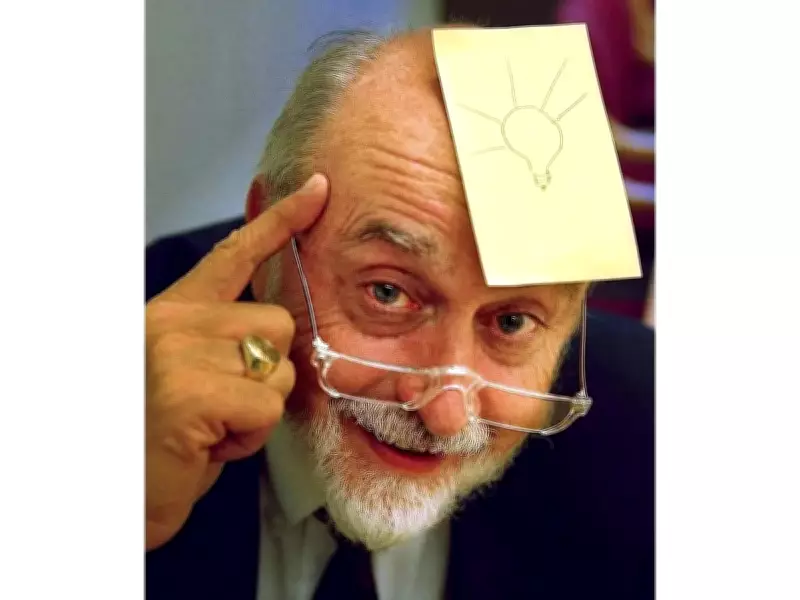
As soon as Fry showed his discovery, it rapidly developed further. At first, it served as a bookmark for a hymnal. Then, it turned into a more comprehensive product known as Post-it Notes. The development of Post-it Notes proves the idea that small changes in design may result in mass distribution. There was a great need for leaving reminders without leaving any traces on surfaces. It also demonstrates a general trend seen in the evolution of inventions: initially, an invention usually has a narrow application, but subsequently, it is transformed into a tool for solving routine problems. The adhesive of Silver and the ideas of Fry have led to the creation of a product that could be seamlessly integrated into people's daily life activities.
A Lesson on Reassessing Failure
The creation of Post-it Notes is usually considered an accidental discovery, but it would be better to call it a reassessment of results. Although the adhesive failed to reach its intended goal, it had hidden potential that could be discovered. Another research published in the National Library of Medicine indicates that unexpected outcomes may serve as a basis for applying new applications if the outcomes are carefully examined.

Significance of Post-it Notes' Story for the Modern World
Even now, Post-it notes are among the most frequently applied office supplies worldwide. This is attributed to their practical purpose and ability to perform a specific task. This history remains relevant today, as the process of innovation is frequently reflected in such inventions. A product does not necessarily start with a distinct idea; it may be triggered by a challenge, an accidental discovery, and a new approach to the problem. The story of Spencer Silver's weak glue and Art Fry's practical application demonstrates the relationship between scientific discoveries and our everyday lives. An insignificant laboratory finding turned into something that would become a part of our daily routine.