

FTII Pune Achieves Historic Milestone with First-Ever Patent Grant
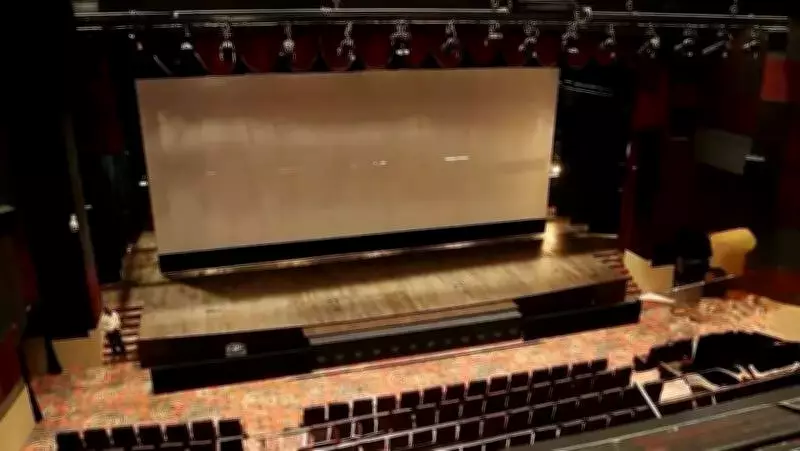
The prestigious Film and Television Institute of India (FTII) in Pune has marked a significant achievement by receiving its very first patent. This groundbreaking recognition is for a newly designed auditorium system that ingeniously combines cinema projection capabilities with stage performance functionality within a single, versatile space.
Addressing Long-Standing Technical Challenges
The innovative system specifically tackles persistent technical issues related to sound quality and optimal screen placement that have traditionally plagued multi-purpose venues. The patent application was formally submitted in October 2024 and was officially granted by the Indian government's Patent Office on January 16. Under the provisions of the Patents Act of 1970, this patent will remain valid and enforceable for a full twenty-year period.
The Mastermind Behind the Innovation
This pioneering project was spearheaded by Ranjit Sadakale, an assistant professor in FTII's Television Engineering department. Professor Sadakale collaborated closely with a dedicated team of students to bring this vision to life. The system's core is a sophisticated, synchronized electromechanical mechanism installed directly within the stage section of the auditorium.

Bridging the Divide Between Cinema and Drama
Conventional theatre architecture has historically maintained a strict separation between the audience area and the stage. While audience needs for viewing cinema and live drama are relatively similar, the stage requirements differ dramatically.
- Cinema Theatres: Require the screen and the primary sound system to be positioned at the very front (the lip) of the stage. The screen is typically perforated to allow sound from the three crucial frontal speakers—Left, Center, and Right (LCR)—to pass through clearly to the audience.
- Drama Theatres: Demand a completely open, unobstructed stage to provide performers with the necessary space for movement and acting.
Professor Sadakale explained the initial design hurdle: "Our first concept involved placing the cinema screen at the rear of the stage to preserve an open area for performances. However, detailed acoustic analysis revealed a critical flaw. This configuration created an audio cavity on stage, resulting in a substantial 30% to 40% loss of sound for spectators seated in the front rows."
The Elegant Patented Solution
Simply moving the screen and speakers to the front solved the acoustic issue but rendered the space impractical for live theatrical productions. The patented system elegantly resolves this conflict.
"Our solution mounts the cinema screen and the LCR speaker array onto a movable electromechanical framework," Sadakale detailed. "This entire structure can shift forward or backward automatically based on the required use. The transition is remarkably swift, taking only 8 to 10 seconds. This allows the same auditorium to function optimally as either a cinema hall or a drama theatre without any compromise on sound quality or aesthetic integrity."
This inventive design represents a true multidisciplinary achievement, seamlessly integrating principles from electronics, mechanical engineering, and advanced sound design.
Inauguration and Official Recognition
The state-of-the-art auditorium featuring this patented system was officially inaugurated on January 11, 2025. The ceremony was graced by Union Minister for Information and Broadcasting, Ashwini Vaishnaw, underscoring the national significance of this indigenous technological innovation from one of India's premier film institutes.






