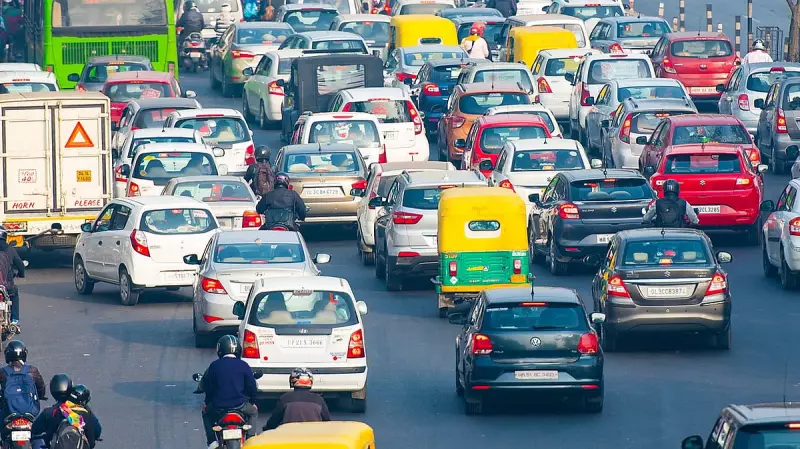
In a significant move aimed at drastically improving road safety, the Indian government has announced plans to implement a cutting-edge vehicle-to-vehicle (V2V) communication system across the country. Union Minister for Road Transport and Highways, Nitin Gadkari, revealed that this technology is slated for a nationwide rollout by the year 2026.
What is V2V Communication and How Does It Work?
Vehicle-to-vehicle communication is an advanced form of wireless technology that allows cars to talk directly to each other. Think of it as a constant, instantaneous conversation happening between vehicles on the road. Using dedicated short-range communication signals, cars equipped with this system can exchange vital data such as speed, position, direction of travel, and braking status.
This real-time data exchange happens without any driver intervention, creating a 360-degree awareness network. For instance, if a vehicle several cars ahead suddenly brakes hard, a warning can be instantly relayed to following vehicles, giving drivers crucial extra seconds to react, even if the incident is not within their direct line of sight.

The Government's Roadmap for Safer Highways
The announcement, made on 09 January 2026, marks a pivotal step in the Union Road Transport and Highways Ministry's strategy to leverage technology for accident prevention. Minister Gadkari emphasized that this proactive measure is designed to address the root causes of collisions, many of which stem from human error and delayed reactions.
The implementation of V2V is expected to be a game-changer for Indian roads, which see a high number of accidents annually. By enabling cars, buses, and trucks to communicate, the system aims to mitigate common accident scenarios like rear-end collisions, lane-changing crashes, and collisions at intersections.
Potential Impact and the Road Ahead
The long-term implications of deploying V2V communication are profound. This technology forms the backbone for the future of connected and autonomous vehicles. By mandating or encouraging this system, the government is laying the necessary groundwork for a smarter, more interactive transportation ecosystem.
While the full technical specifications and implementation protocols are yet to be detailed, the 2026 deadline sets a clear timeline for automakers and technology providers. The move is likely to push the automotive industry to integrate compatible systems in new vehicles and could spur discussions about retrofitting older models.
This initiative underscores a major policy shift from reactive safety measures, like better crash structures, to proactive, preventive technologies. If successfully deployed, V2V communication could significantly reduce the economic and human cost associated with road traffic accidents in India, making journeys safer for millions of citizens.