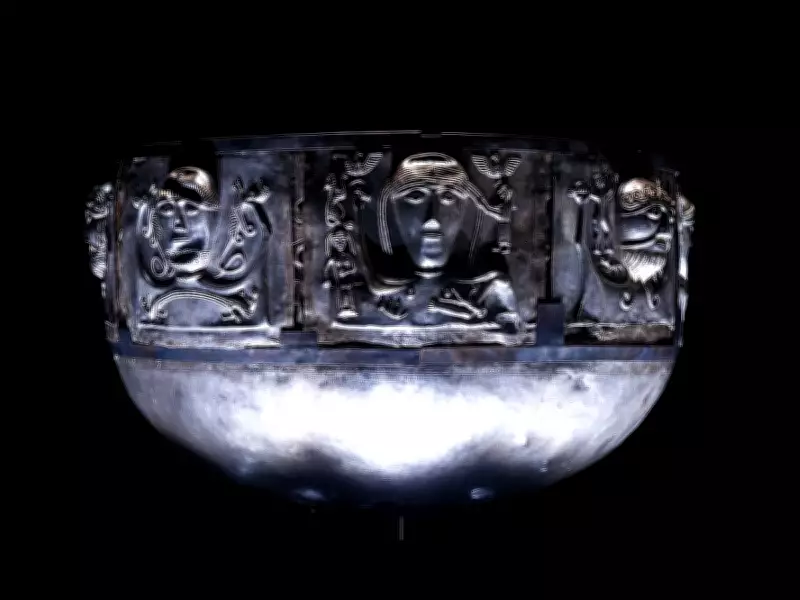
Ever since the Gundestrup Cauldron was unearthed from a Danish peatland in 1891, it has remained one of archaeology's most captivating enigmas. This silver vessel, consisting of multiple beaten-sheet plates later reassembled, features a complex fusion of Celtic and Thracian imagery that defies simple cultural categorization. It offers invaluable insights into Iron Age mobility, ritual behavior, and the extraordinary preservation capabilities of waterlogged peatlands.
A Surprise in Mud
On May 28, 1891, peat cutters working near Gundestrup, Denmark, stumbled upon a remarkable historical artifact. Rather than a single intact vessel, they recovered the cauldron in numerous broken fragments—specifically, fifteen separate silver plates. This detail is significant to archaeologists, as it strongly suggests the vessel was not lost accidentally but deliberately disassembled and buried as part of a ritual act.
The bog's waterlogged conditions created an oxygen-free environment that preserved both metalwork and organic materials for centuries. Routine peat cutting disturbed the ground, exposing the ancient artifact. According to the University of Notre Dame, such conditions are ideal for preserving historical materials over long periods. The researchers also note that routine agricultural work and peat cutting often shift the ground enough to reveal artifacts that would otherwise remain hidden. For the Danish laborers, an ordinary day of cutting fuel turned into a monumental archaeological discovery.

A Silver Cultural Riddle
After cleaning and studying the pieces, the cauldron immediately challenged accepted historical narratives. Harvard's Celtic studies program notes that the vessel is made entirely of beaten sheet silver. Large, richly decorated silver vessels are uncommon in Iron Age northwestern Europe, where metalwork tends to be simpler and more functional. The silver is of very high quality, and the craftsmanship indicates it was a possession of the elite, made by highly specialized artisans far from its final deposition site.
The carved imagery on the silver plates added another layer of mystery. Scholars have linked the cauldron's visual style to both Celtic and Thracian artistic traditions, according to a Harvard University report. This mixture of stylistic influences complicates simple cultural classifications. The cauldron cannot be neatly assigned to a single tribe or territory. Instead, its hybrid style points to an extensive network of trade, migration, and cultural exchange across Iron Age Europe, underscoring the interconnectedness of ancient societies.
Maintaining the Intrigue
More than 130 years after its discovery, the Gundestrup Cauldron remains an important teaching tool because it refuses to yield easy answers. The fact that it was found in pieces is still a matter of intense debate. In archaeology, objects deposited in wetlands are rarely considered mere rubbish. The deliberate breaking and deposition may indicate ritual practice, though scholars remain divided on its precise meaning.
The Gundestrup Cauldron stands as a striking example of how much archaeologists can learn from a single find. Thanks to the protective embrace of a Danish bog, it has survived and continues to prompt debate because its origins remain contested.