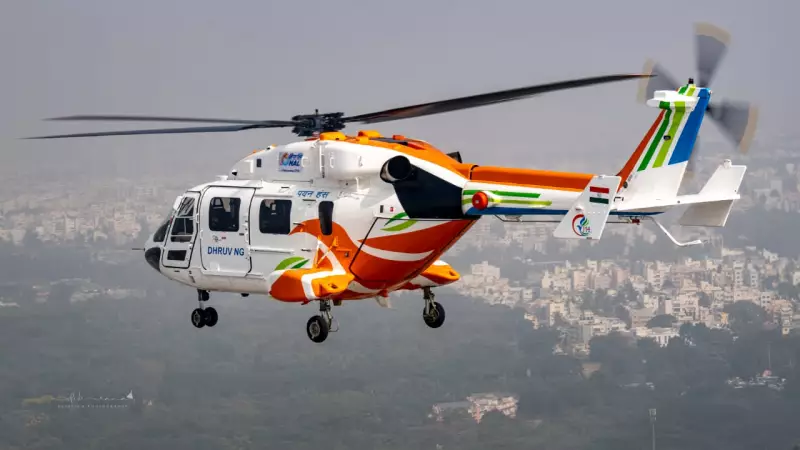
In a significant stride for India's aerospace sector, Hindustan Aeronautics Limited (HAL) successfully conducted the inaugural flight of its new civilian helicopter, the Dhruv New Generation (Dhruv-NG), in Bengaluru on Tuesday, December 30, 2025. The event marks a strategic pivot for the state-owned aerospace giant, which is now balancing its focus equally between defence and the burgeoning civil aviation market.
A New Chapter for HAL and Civil Aviation
The historic flight was followed by a key certification milestone. The Directorate General of Civil Aviation (DGCA) granted HAL certification for the indigenous manufacturing of the Shakti civil engine. This approval is a crucial step towards the full certification of the Dhruv-NG helicopter before its commercial launch. Union Civil Aviation Minister Kinjarapu Ram Mohan Naidu, present at the event, highlighted this strategic shift, noting that HAL's internal design has changed from a primary focus on defence to an equal emphasis on civil aviation.
Capabilities and Initial Orders
Detailing the helicopter's potential, HAL Chairman and Managing Director D K Sunil outlined its versatile applications. The Dhruv-NG is configured to carry 14 passengers and is designed for roles including VIP transport, heli-tourism, and air ambulance services. Even before receiving its full DGCA certification, HAL has secured its first commercial order. Pawan Hans Helicopter Limited has placed an order for eight Dhruv-NG helicopters, which will be deployed to transport personnel and materials to the Bombay High oil fields operated by the Oil and Natural Gas Corporation (ONGC).

The Road to Certification and Market Ambitions
Sunil stated that HAL plans to conduct approximately 150 test flights over the next two months using two prototype helicopters to complete the aircraft's certification process. On the commercial front, he expressed strong optimism about the helicopter's market potential. He cited a current market demand for about 1,000 helicopters, with projections suggesting a requirement for 15,000 helicopters in the next decade. The growth of heli-tourism, especially in pilgrimage circuits like the Char Dham, is expected to be a major demand driver.
A key factor in the helicopter's competitiveness will be its level of indigenous content. Sunil revealed that 65% of the current Dhruv-NG is indigenously produced, which helps keep costs competitive. Looking ahead, HAL has set an ambitious target to increase this indigenisation level to 80% over the next 10 years, committing to invest significantly to achieve this goal. Beyond Pawan Hans, interest in the aircraft has been shown by several state governments and the Border Security Force (BSF), indicating a diverse potential customer base.
This maiden flight of the Dhruv-NG represents more than just a new product launch; it signals HAL's determined entry into the civil aerospace arena, aiming to capture a substantial share of a growing market with a technologically advanced, increasingly homegrown solution.