

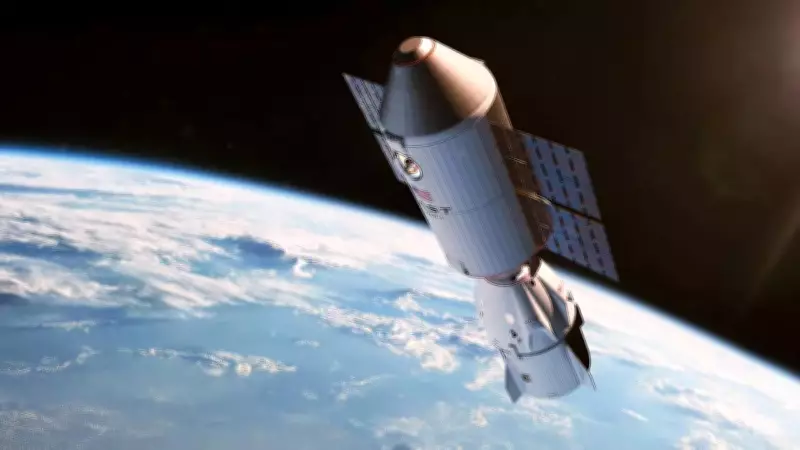
Haven-1: The Dawn of Commercial Space Stations
For over two decades, the International Space Station has served as humanity's constant presence in low Earth orbit. However, NASA has been transparent about the ISS's finite lifespan, with current projections indicating a controlled deorbit around 2030. As this era approaches its conclusion, a new chapter is beginning with private enterprises stepping into the cosmic arena.
Vast Space Takes the Lead with Haven-1
Among the emerging players, Vast Space has positioned itself at the forefront with its ambitious project, Haven-1. This compact commercial outpost is poised to become the world's first privately-owned space station, marking a significant milestone in space exploration history. Assembly activities are already in progress, though the launch timeline has experienced a minor adjustment.
World's first private station Haven-1 now targets 2027 construction

Haven-1 distinguishes itself through its practical design philosophy. Rather than pursuing grandiose scale, Vast Space has engineered a compact, modular station that can be launched as a single unit aboard a SpaceX Falcon 9 rocket. This strategic decision sets it apart from numerous competitors who require multiple launches for assembly.
Originally aiming for a 2026 launch, Vast Space has revised its target to 2027, with company leadership identifying the first quarter as the most realistic window. CEO Max Haot has expressed confidence in this updated timeline, noting that the schedule has remained stable recently. Despite this adjustment, Haven-1 maintains a substantial lead over most competing projects.
Strategic Partnerships Accelerate Development
Industry experts characterize Haven-1's schedule as ambitious yet achievable, largely because the station leverages existing, proven hardware rather than developing entirely new systems from scratch.
How SpaceX enables Haven-1's rapid development
One of Haven-1's most distinctive features is its deep integration with SpaceX infrastructure. Once operational in orbit, the station will depend on SpaceX's Crew Dragon capsule for essential life-support functions including oxygen supply and power management. This approach is particularly advantageous since Crew Dragon has already demonstrated reliability through years of transporting astronauts to and from the International Space Station.
By building upon established technology, Vast Space avoids redundant development efforts and significantly shortens its timeline. The company has reportedly recruited numerous former SpaceX and NASA engineers, providing crucial expertise that explains how a relatively new company can realistically discuss orbital operations within four years of inception.
NASA Collaboration and Structural Progress
Earlier this year, Vast Space achieved a significant milestone by completing Haven-1's primary structure. By year's end, the company plans to conduct comprehensive testing in collaboration with NASA, despite the agency not having finalized all requirements for post-ISS commercial stations.
NASA's involvement remains crucial for any company seeking long-term relevance in the emerging commercial space station market. The agency has been unusually transparent about its vision for the post-ISS era, emphasizing that it does not intend to own the next generation of orbital facilities but rather partner with commercial providers.
Currently, Haven-1 remains Earth-bound, undergoing assembly and rigorous testing procedures. If development proceeds according to plan, sometime in 2027 a single Falcon 9 rocket will carry humanity's first commercially-built space station into orbit, potentially inaugurating a new era of private space habitation and research.






