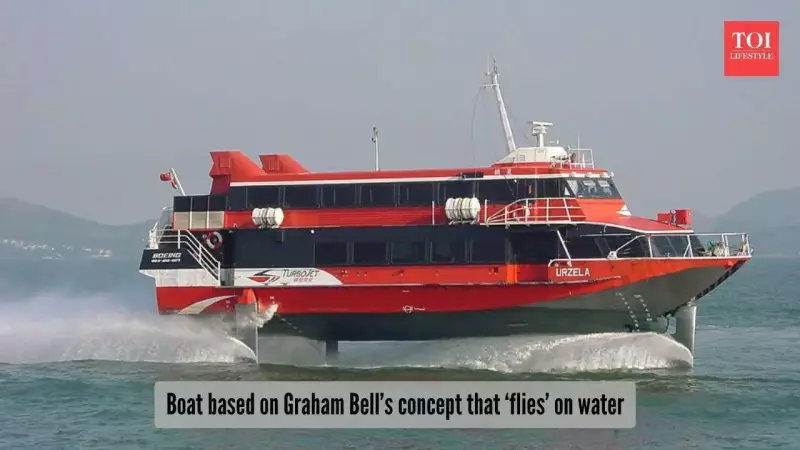
Picture a vessel that doesn't just cut through the water but elegantly rises above it, gliding on submerged wings. This isn't a scene from a futuristic film; it's the reality of hydrofoil technology. Once a niche pursuit for speed enthusiasts, hydrofoils are experiencing a major renaissance, now positioned as a powerful solution to slash pollution and fuel consumption in maritime transport.
What Exactly Is a Hydrofoil?
A hydrofoil functions as an underwater wing system attached to a boat's hull. As the vessel gains speed, these foils generate lift, raising the hull completely out of the water. This action dramatically reduces drag—the resistance water creates against movement. The result is a boat that moves faster, offers a smoother ride by flying over waves, and consumes significantly less energy. It's a transformative efficiency upgrade for water travel.
A Journey from Speed Dreams to Electric Reality
The story of the hydrofoil began over a century ago. In 1869, French inventor Emmanuel Denis Farcot patented a design for a rowing boat with lifting wedges, though a working model may never have been built. The concept became a tangible reality in 1906 thanks to Italian inventor Enrico Forlanini, who successfully tested a model on Lake Maggiore using innovative ladder-like foils.

Even Alexander Graham Bell, famed for the telephone, was captivated by the idea. He developed the HD-4 hydrofoil, which in 1919 achieved a breathtaking speed of over 113 km/h, a marine speed record it held for an entire decade.
By the 1960s, hydrofoils saw renewed interest for their speed and handling in rough seas. However, as Professor Jakob Kuttenkeuler of Sweden's KTH Royal Institute of Technology notes, their potential was capped by heavy metal construction and a dependence on fossil fuels. V-shaped foils helped but were still energy-intensive, stalling wider adoption.
Electrification Fuels a Sustainable Future
Today, the driving force behind the hydrofoil's revival is clear: electrification. "Today, the driving force for going hydrofoil is electrification," confirms Professor Kuttenkeuler. The breakthrough came from addressing the core limitation of electric boats—battery range.
Engineer Gustav Hasselskog founded the company Candela in 2014 after a stark realization: his traditional boat burned 15 times more fuel per kilometer than his car. He identified hydrofoils as the perfect match for electric vessels, as the drastic reduction in drag allows for much longer range on a single battery charge.
Modern designs have replaced clunky, manual systems with streamlined single foils equipped with sensors that automatically adjust for balance, ensuring a stable flight above the water. The energy savings are monumental, reaching up to 80% compared to conventional boats.
This green and efficient profile is capturing global attention. Cities worldwide, including several in India and Seattle in the USA, are actively considering these electric hydrofoil ferries as a core part of their future public transit networks, promising commuters a clean, quiet, and swift journey across waterways.