IIT Bombay's Breakthrough Technology Turns Fallen Leaves Into Sustainable Cooking Fuel
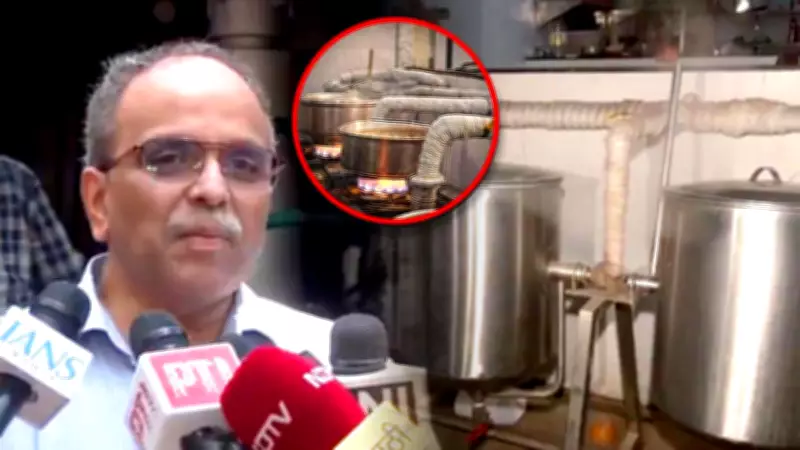
In a significant stride toward energy independence and environmental sustainability, the Indian Institute of Technology Bombay (IIT Bombay) has developed an indigenous biomass gasification system that converts dry leaf waste into efficient cooking fuel. This innovative technology addresses the dual challenges of rising LPG costs and the disposal of organic waste on the institute's expansive green campus.
Addressing the LPG Crisis with Local Solutions
Faced with escalating fuel prices and periodic shortages of liquefied petroleum gas (LPG), IIT Bombay has pioneered a self-reliant approach to meet its culinary energy needs. The project, initiated in 2014 under the leadership of Professor Sanjay Mahajani from the Department of Chemical Engineering, leverages the abundant fallen leaves that accumulate across the campus. Instead of treating this biomass as waste, the institute now processes it into a viable alternative to conventional cooking fuels.
The Biomass Gasification Process Explained
The technology involves a multi-step procedure that begins with the collection and compression of dry leaves into dense pellets. These pellets are then fed into a specially designed gasification unit, where they undergo controlled combustion. Unlike direct burning, which releases high levels of particulate matter and pollutants, this system efficiently converts the biomass into a clean-burning gas suitable for cooking and thermal applications.

Professor Mahajani emphasized that the gasification process minimizes harmful emissions, making it an environmentally friendly solution. "Direct combustion of leaves generates substantial particulate matter, posing health and environmental risks," he noted. "Our patented system safely harnesses the energy content of the leaves, providing a sustainable fuel source while mitigating air pollution."
Operational Benefits and Campus Integration
Currently, the biomass gasification system powers several campus kitchens, significantly reducing IIT Bombay's reliance on traditional LPG cylinders. This integration not only cuts fuel expenses but also promotes a circular economy by repurposing organic waste. The initiative aligns with broader goals of environmental stewardship and energy security, showcasing how academic institutions can lead in practical sustainability efforts.
Future Implications and Scalability
The success of this project at IIT Bombay highlights the potential for scaling such technologies to other institutions, urban areas, and rural communities grappling with similar energy and waste management issues. By transforming a common waste product into a valuable resource, the biomass gasification system offers a replicable model for enhancing self-sufficiency and reducing carbon footprints.
As global attention shifts toward renewable energy and waste reduction, IIT Bombay's innovation stands as a testament to indigenous engineering prowess. It demonstrates how localized solutions can effectively tackle national challenges like the LPG crisis, paving the way for a more sustainable and resilient energy future.