

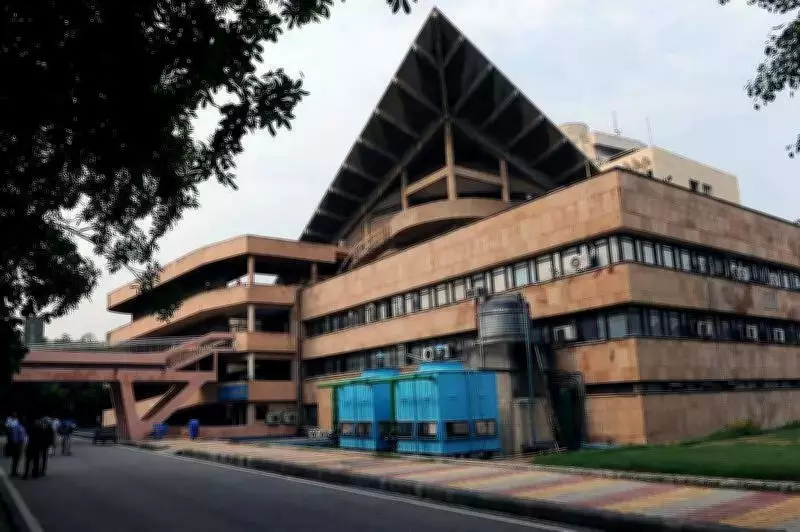
IIT Delhi Innovates with High-Efficiency Air Conditioner to Combat Rising Cooling Demand
As soaring temperatures across India exacerbate heat stress and drive a dramatic increase in cooling needs, a team of researchers at the Indian Institute of Technology (IIT) Delhi is pioneering a next-generation air conditioning system. This innovative technology aims to drastically cut electricity consumption while ensuring optimal indoor comfort levels, offering a potential solution to the country's escalating energy challenges.
Projected Surge in Cooling Demand and Its Implications
According to the India Cooling Action Plan, formulated by the Ministry of Environment, Forest and Climate Change, the electricity demand for cooling purposes in India is anticipated to triple by the year 2037-38. This projection stems from a combination of intensifying heatwaves and the expanding adoption of air conditioners in both residential and commercial settings. The anticipated surge is expected to place significant strain on natural resources and could lead to higher electricity costs for consumers nationwide, underscoring the urgency for more efficient cooling solutions.
Breakthrough in Hybrid Air-Conditioning Technology
To tackle this pressing issue, a dedicated research team from the Department of Mechanical Engineering at IIT Delhi, spearheaded by Professor Anurag Goyal and including PhD scholar Ananthakrishnan K, has successfully developed a laboratory-scale prototype of a high-efficiency hybrid air-conditioning system. Preliminary testing results are highly promising, indicating that this advanced technology could reduce electricity consumption by nearly one-third when compared to conventional room air conditioners currently available in the market.

How the New System Works: A Leap Beyond Conventional Methods
Unlike standard vapour-compression air conditioners, which rely on an energy-intensive process of overcooling air to remove humidity, the innovative hybrid system incorporates a compact add-on module designed to directly extract moisture from the air. This module utilizes a liquid desiccant, specifically a salt solution that effectively absorbs water vapour from the incoming air stream. A critical feature is the use of a thin polymer membrane that separates the air from the solution, thereby preventing any salt particles from infiltrating indoor spaces—a significant limitation that plagued earlier designs in this field.
The absorbed moisture gradually dilutes the salt solution, which is then regenerated using waste heat that is already expelled by the air conditioner's outdoor condenser unit. This clever integration eliminates the necessity for additional heaters or burners, thereby enhancing the overall energy efficiency of the system and making it more sustainable.
Substantial Energy Savings and Broader Impact
Under typical operating conditions, electricity consumption dropped from about 1,200 watts in a standard room AC to around 800 watts in the hybrid system, achieving roughly 33% energy savings while maintaining the same comfort levels, explained Professor Goyal. The estimated savings are particularly noteworthy, ranging from approximately 28% in humid regions to over 41% in drier climates, demonstrating the system's adaptability and effectiveness across diverse environmental conditions.
Researchers are optimistic that this groundbreaking technology will play a pivotal role in supporting sustainable cooling solutions as India's demand for air conditioning continues its upward trajectory. By addressing both energy efficiency and environmental concerns, the development marks a significant step forward in the quest for more resilient and eco-friendly infrastructure in the face of global warming and resource constraints.






