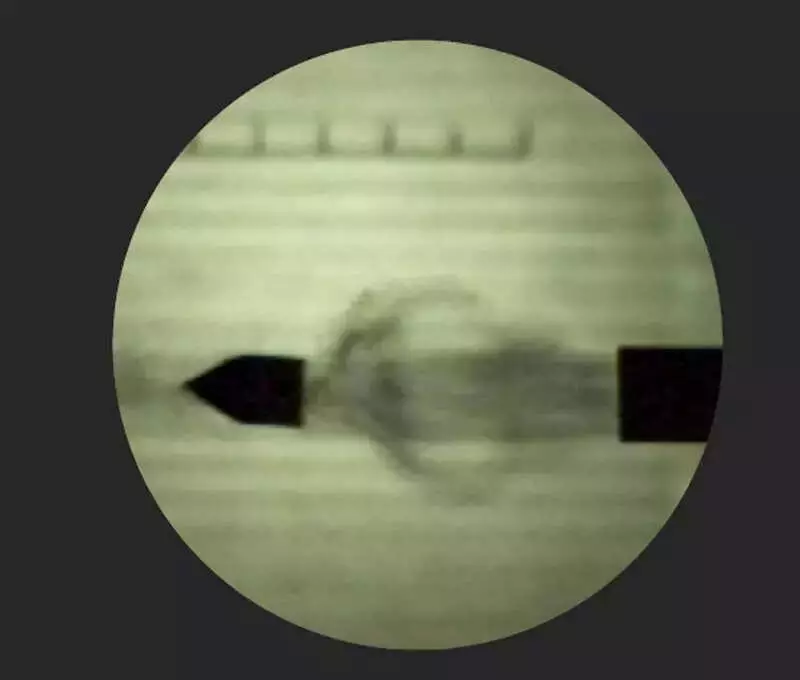
Seven talented students from the Indian Institute of Technology Hyderabad have achieved something remarkable. They built a low-cost light gas gun capable of firing projectiles at supersonic speeds. This innovative device uses helium and an eight-meter-long barrel to launch projectiles.
Aiming for Supersonic Speeds
The student team set a clear goal from the start. They wanted to create a gas gun that could fire faster than the speed of sound. Sound travels at 343 meters per second in air. Their prototype projectile now reaches incredible speeds of up to 800 meters per second.
Simple Materials, Advanced Results
What makes this project special is its clever use of everyday materials. Instead of expensive metal barrels, the students used sanitary-grade PVC pipes sourced from local construction yards. These pipes can withstand pressures up to 30 atmospheres.

The team also created 3D-printed projectiles for their experiments. Pritam Hemant Bagle, a physics department student on the team, explained how their system works. "We convert the gas's potential energy into kinetic energy," he said. "This allows the projectile to reach very high speeds while keeping the pressure low."
Expert Guidance and Support
Karthick SK, an assistant professor of mechanical and aerospace engineering, guided the students through this project. He highlighted their innovative approach. "Traditional guns use metal barrels because they handle extremely high pressure," Karthick noted. "These pressures usually reach around 200 atmospheres. Our team chose PVC pipes instead."
The professor described their setup in detail. "We use a helium cylinder and compressed gas at 10 atmospheres in our eight-meter-long barrel. This configuration accelerates a three-gram bullet to a maximum speed of 800 meters per second."
Research with Real-World Applications
This isn't just an academic exercise. The students built their prototype with practical research in mind. M Raj Kiran Reddy, a PhD student involved in the project, explained its potential applications.
"This is a test rig," Reddy said. "When a space probe re-enters Earth's orbit, it can collide with debris at supersonic speeds. Our system can study the impact of such debris on space probes. We can also examine how projectiles disintegrate under extreme conditions."
Budget-Friendly Innovation
The entire project was completed on a modest budget of about Rs 50,000. The students emphasized that this was purely for research purposes. They conducted multiple studies to measure projectile velocity accurately.
Their findings will be presented at the seventh national wind tunnel conference. This event takes place at the Birla Institute of Technology in Ranchi during the third week of February.
Support from BHARATI Initiative
This exciting project received support through the BHARATI initiative. BHARATI stands for Bold Hearted Aspirants Raising to Transform India. The program offers funding and mentoring to first-year BTech students who want to innovate.
The initiative helped these seven IIT Hyderabad students turn their ambitious idea into reality. Their success demonstrates how proper support can unleash student creativity and lead to meaningful technological advancements.