The Centre on Monday launched India's first dedicated digital platform for wind turbine supply chain management, aiming to strengthen domestic manufacturing, improve sourcing transparency, and support the country's ambitious plan to scale up wind power capacity to 155 GW by 2035.
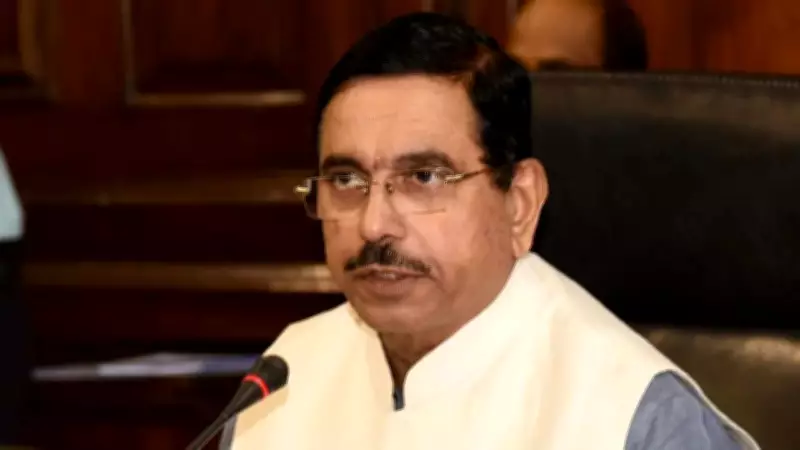
Union Minister for New and Renewable Energy Pralhad Joshi unveiled the Wind Turbine Supply Chain Management (WT-MARUT) portal at a Global Wind Day conference in Goa, stating that the initiative would help build a resilient domestic ecosystem for one of India's fastest-growing clean energy sectors.
The launch comes as India's wind industry records its strongest growth phase in years. The country added a record 6.1 GW of wind power capacity in FY26, a 46% increase over the previous year, taking total installed wind capacity to more than 56 GW. India is currently the world's fourth-largest wind energy market.

Developed by the Ministry of New and Renewable Energy (MNRE) with support from the Indian Wind Turbine Manufacturers Association (IWTMA), the portal is designed to provide end-to-end visibility of component sourcing, facilitate supplier discovery and qualification, strengthen domestic procurement under the Approved List of Models and Manufacturers (ALMM) framework, and improve the export readiness of Indian manufacturers. The move is significant as India seeks to reduce dependence on imported components while positioning itself as a global manufacturing hub for renewable energy equipment.
According to an IWTMA-PwC report released at the event, exports of wind turbines and components crossed Rs 12,000 crore in FY26, nearly 50% higher than the previous year. Industry estimates suggest India could capture 10% of the global wind turbine supply chain opportunity by 2030 and as much as 20% by 2040 if manufacturing capacity continues to expand.
“Initiatives like the WT-MARUT portal will strengthen supply chain visibility, boost domestic manufacturing, and enhance India's competitiveness in global markets,” Joshi said. He expressed confidence that the country would achieve 100 GW of wind installations by 2030 and 155 GW by 2035.
The government's push comes despite the vast majority of India's wind resources remaining untapped. While the National Institute of Wind Energy estimates the country's technical wind potential at about 1,164 GW, less than 5% of it has been harnessed so far.
Energy planners increasingly view wind power as essential for balancing India's rapidly expanding renewable energy portfolio. Studies by the Central Electricity Authority (CEA), TERI, and the National Institute of Wind Energy have projected a requirement of more than 100 GW of wind capacity by 2030 to support a reliable and affordable energy transition alongside solar power.
Industry leaders said India's manufacturing base is already capable of supporting a major scale-up. Girish Tanti, Chairman of IWTMA, said the country has around 24 GW of annual wind equipment manufacturing capacity and strong capabilities across key components such as nacelles, blades, gearboxes, and towers.
He said India could raise annual wind installations to 15 GW by 2030 and emerge as a major global export hub for wind equipment, helping advance the country's target of 500 GW of non-fossil fuel power capacity by 2030 and its net-zero commitment for 2070.
For renewable energy investors and developers, the portal is expected to improve supply chain reliability and reduce procurement bottlenecks, factors that have increasingly come into focus as India accelerates the deployment of both solar and wind projects to meet its growing electricity demand.