In a landmark move to transform India's research and development ecosystem, the government has announced a massive ₹1 lakh crore fund specifically designed to mitigate R&D risks and spur private investment in cutting-edge technologies. This strategic initiative represents India's most ambitious push yet to position itself as a global leader in technological innovation.
The Genesis of India's R&D Transformation
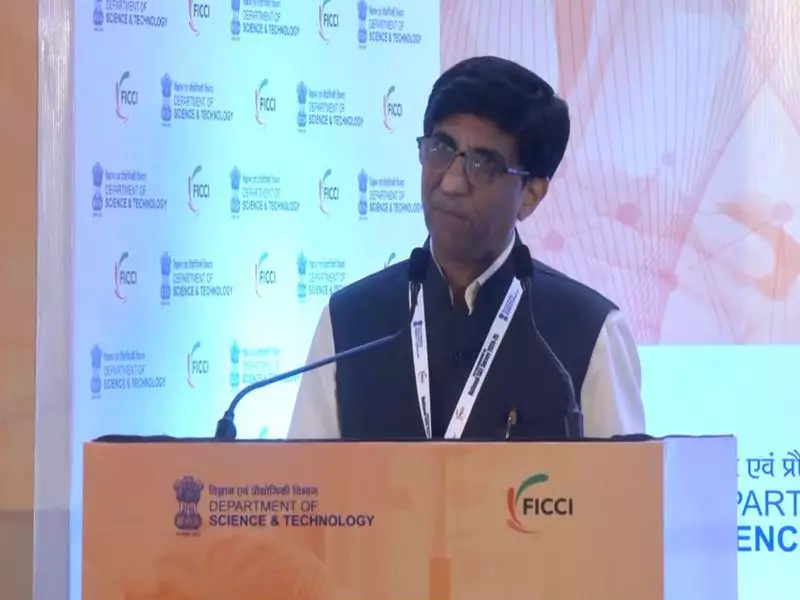
The revolutionary fund operates under the Anusandhan National Research Foundation (ANRF), established through an Act of Parliament. According to Dr. Abhay Karandikar, Secretary of the Department of Science and Technology (DST), this initiative marks a fundamental shift in how India approaches research funding. "The idea is to create a corpus where the government will put in money, and this will be used to provide grants, but not just grants—it will also be used to mitigate risks," Dr. Karandikar explained in an exclusive interview.
The timing of this announcement coincides with India's rapidly evolving position in the global technology landscape. With the nation making significant strides in areas like artificial intelligence, quantum computing, and semiconductor technology, this fund addresses the critical gap in high-risk, high-reward research that traditionally struggles to attract private investment.

How the Risk Mitigation Fund Works
The fund's innovative structure represents a departure from conventional research funding models. Rather than simply providing grants, the ANRF will act as a strategic risk partner for private companies and research institutions venturing into uncharted technological territories. "If a private company wants to invest in a certain area of research which is high-risk, the foundation will share that risk," Dr. Karandikar elaborated.
This risk-sharing mechanism is particularly crucial for technologies requiring substantial capital investment with uncertain outcomes. The fund will support research across multiple domains including artificial intelligence, machine learning, quantum technologies, semiconductors, clean energy, and healthcare innovations. By absorbing a portion of the potential financial losses, the government aims to create an environment where private entities feel secure enough to invest in groundbreaking research.
Catalyzing Private Investment in Research
One of the most significant aspects of this initiative is its focus on leveraging public funds to attract private capital. Dr. Karandikar emphasized that the foundation will actively work on creating mechanisms to attract private investment into research areas that are typically considered too risky by corporate entities. "We are also working on creating mechanisms to attract private investment in research. The idea is that if the government puts in money, it will attract private investment," he stated.
The approach recognizes that while India has strong fundamental research capabilities, the translation of this research into commercially viable technologies has often been hampered by funding gaps. The ₹1 lakh crore fund aims to bridge precisely this gap by providing the necessary financial security for private players to engage in long-term, high-stakes research projects.
This public-private partnership model is expected to create a virtuous cycle where government support de-risks initial research phases, leading to successful prototypes that then attract further private investment for scaling and commercialization. The strategy aligns with India's broader ambitions of becoming a $5 trillion economy and establishing itself as a global technology powerhouse.
Implementation and Expected Impact
The implementation of this massive funding initiative will be overseen by the Department of Science and Technology, with the ANRF serving as the primary vehicle for disbursement. The foundation is expected to develop specialized evaluation frameworks to assess project proposals, with emphasis on both scientific merit and potential for technological breakthrough.

Industry experts have welcomed the announcement, noting that it addresses a critical bottleneck in India's innovation ecosystem. The availability of risk capital for cutting-edge research has historically been limited, forcing many Indian researchers and startups to either scale down their ambitions or seek funding overseas.
The fund is expected to have a transformative impact on several key sectors. In semiconductor design and manufacturing, it could enable Indian companies to compete globally despite the high capital requirements. In quantum computing, it could accelerate India's progress in catching up with global leaders. Similarly, in artificial intelligence and machine learning, it could fund the development of indigenous solutions tailored to India's specific needs.
Dr. Karandikar's vision for the fund extends beyond immediate technological gains. He sees it as instrumental in building a sustainable research ecosystem that can continuously generate innovations addressing both national priorities and global challenges. The initiative also aims to strengthen academic-industry linkages, creating more opportunities for researchers to see their work translated into real-world applications.
As India positions itself at the forefront of the fourth industrial revolution, this ₹1 lakh crore R&D risk mitigation fund could well become the catalyst that propels the nation into the league of global technology leaders. By strategically addressing the funding gap in high-risk research, India is not just investing in technology—it's investing in its future as an innovation-driven economy.