

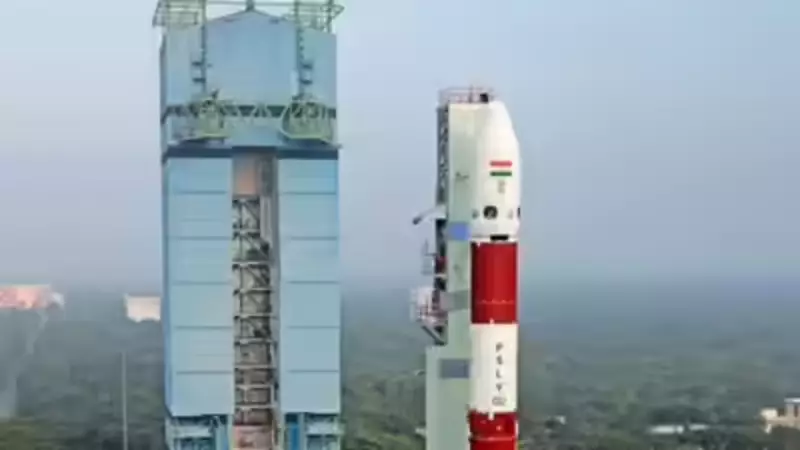
India is poised to take a giant leap in advanced space capabilities this Monday. The launch of OrbitAid's 25-kilogram Ayulsat satellite aboard the Indian Space Research Organisation's (ISRO) PSLV-C62 rocket will mark a pivotal moment, bringing the nation closer to mastering on-orbit satellite refuelling.
A Step Towards an Exclusive Club
Success in this mission will edge India towards becoming only the second country in the world to demonstrate this complex technology. To date, only China has claimed this capability, following a demonstration last year. However, details of the Chinese mission remain limited and official disclosures are sparse.
It is notable that no other major spacefaring nation, including the United States, has publicly demonstrated a full on-orbit refuelling operation. While US firm Astroscale is known to be developing similar technology, it has not yet conducted a launch for this purpose.

Ayulsat's Targeted Mission
The Ayulsat mission, however, is designed as a foundational step. It will not execute a complete refuelling between two separate spacecraft. Instead, the satellite will act as a target to validate fuel transfer processes in the actual space environment.
This initial phase focuses on internal refuelling within a single satellite unit. This crucial experiment will allow engineers to gather vital data on how fluids behave under microgravity conditions in real orbital settings, a key challenge for future, more complex servicing missions.
Timeline and Significance
OrbitAid's founder and CEO, Sakthikumar R, informed The Times of India that the first refuelling experiment is scheduled to occur within four hours of the launch. This rapid timeline underscores the mission's focused and efficient design.
This demonstration represents a strategic move for India's space sector, showcasing its growing prowess in developing sustainable and long-term space infrastructure. The ability to refuel satellites in orbit can dramatically extend their operational life, reduce space debris, and lower the long-term costs of maintaining critical space-based assets for communication, navigation, and earth observation.
The eyes of the global space community will be on ISRO's PSLV-C62 as it lifts off, carrying not just a satellite, but India's ambitions to secure a leading role in the next frontier of space logistics and sustainability.






