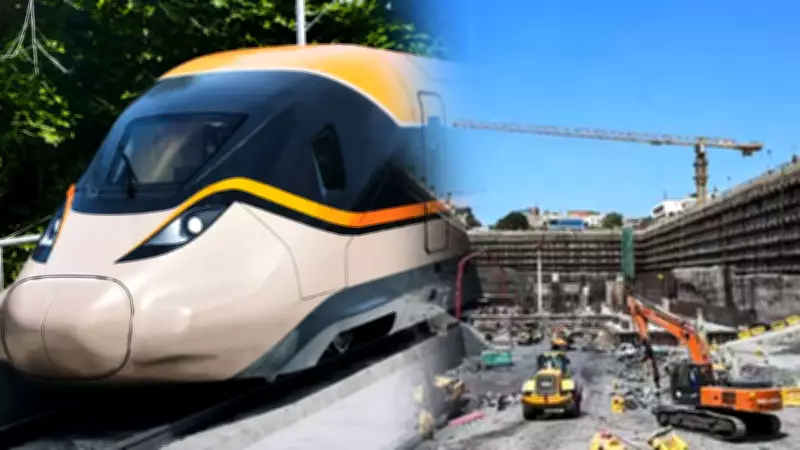
The Ministry of Railways has unveiled the first official glimpse of India's proposed bullet train for the Mumbai-Ahmedabad High-Speed Rail Corridor. This ₹1.1 lakh crore project, based on Japan's Shinkansen technology, aims to reduce travel time between the two cities to nearly two hours and is expected to launch by August 2027. The project also includes India's first undersea rail tunnel beneath Thane Creek.
Project Details and Significance
The Mumbai-Ahmedabad High-Speed Rail Corridor is a landmark infrastructure project that promises to revolutionize travel in India. With a total cost of ₹1.1 lakh crore, it leverages Japan's renowned Shinkansen technology, known for its speed, safety, and reliability. The bullet train will cover a distance of approximately 508 kilometers, slashing the current travel time from around seven hours to just two hours. This will not only enhance connectivity between two major economic hubs but also boost tourism, trade, and regional development.
Key Features of the Bullet Train
- Speed and Efficiency: The train will operate at speeds up to 320 km/h, offering a comfortable and time-saving alternative to road and air travel.
- Undersea Tunnel: A 21-kilometer undersea tunnel beneath Thane Creek will be India's first such structure, showcasing engineering excellence.
- Advanced Safety Systems: The Shinkansen technology includes automatic train control, earthquake early warning systems, and robust braking mechanisms.
- Eco-Friendly Design: The train will be powered by electricity, reducing carbon emissions compared to conventional modes of transport.
Timeline and Current Status
The project is progressing steadily, with the target launch date set for August 2027. Land acquisition, tunnel boring, and station construction are underway across Gujarat and Maharashtra. The first glimpse of the bullet train design has generated excitement among citizens, signaling a new era in Indian railways.

Economic and Social Impact
The high-speed rail corridor is expected to create thousands of jobs during construction and operation. It will also spur urbanization along the route, with new business districts and residential areas emerging near stations. The project aligns with the government's vision of a modern, connected India, and is a key component of the 'Make in India' initiative, as many components will be manufactured locally.
The unveiling of the bullet train's first look marks a significant milestone. As India prepares to join the league of nations with high-speed rail, the Mumbai-Ahmedabad corridor stands as a testament to technological progress and international cooperation.