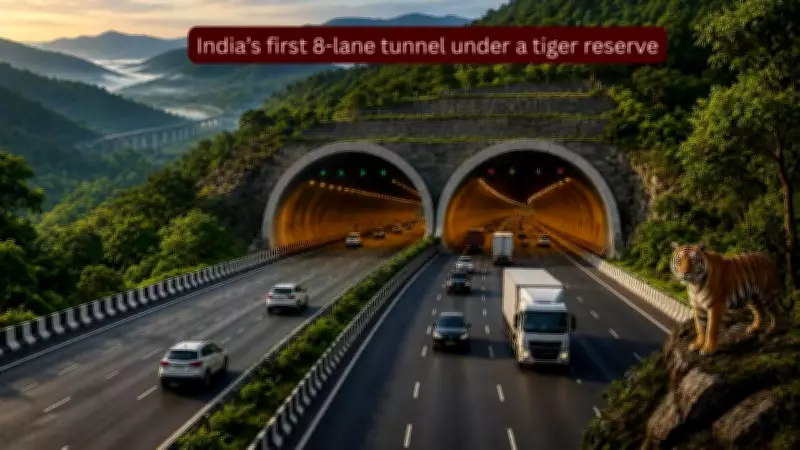
In a significant development, India's first 8-lane tunnel is set to open on June 20, 2026, marking a major upgrade to the Delhi-Mumbai Expressway. According to reports by NDTV and other media outlets, this tunnel is one of the most anticipated sections of the expressway, built beneath a tiger reserve. It is being hailed as an engineering marvel and is constructed under Rajasthan's Mukundra Hills Tiger Reserve, near Kota. For travelers, this means smoother drives and shorter travel times.
More About the Tunnel
The tunnel is a 4.9-kilometre twin-tube structure that passes through the ecologically sensitive Mukundra Hills Tiger Reserve in Rajasthan. By keeping traffic underground, it minimizes disruption to wildlife movement. Reports indicate that the tunnel will become operational after final safety clearances, with authorities targeting June 20 as the launch date. The project is part of the Delhi-Vadodara section of the larger Delhi-Mumbai Expressway, which was initially launched in 2019. Once fully operational, it is expected to dramatically reduce travel times between Delhi and Mumbai.
What It Means for Travellers
Previously, motorists traveling through the Kota region had to navigate winding roads around the Mukundra hills. With the new tunnel bypass, travel will be easier, more comfortable, and safer. For road trippers, benefits include:

- Reduced time in hilly sections
- Improved driving comfort
- High-speed travel
- Better fuel efficiency
- Smoother traffic flow
The tunnel is also expected to improve road connectivity to destinations such as Kota, Bundi, Ranthambore, and other attractions in Rajasthan.
A Boost for Rajasthan Tourism
Kota in Rajasthan has long been known as an educational hub, but the surrounding region offers plenty for travelers. The beautiful Chambal River, historic forts, palaces, ancient stepwells, and wildlife reserves make Kota one of the most underrated travel destinations. Improved connectivity could encourage more visitors to explore these attractions.
Road Construction with Conservation
One of the most remarkable aspects of the project is its emphasis on environmental protection. Building a major highway through a tiger reserve posed challenges, but engineers opted for an underground solution to minimize habitat fragmentation. According to project information released by the National Highways Authority of India, the twin tunnels feature modern safety systems and monitoring infrastructure.
What Travellers Should Know Before Planning a Drive
If you are considering using this stretch once it opens, check official traffic advisories before departure, as operational dates may shift depending on final inspections.
The Future of Long-Distance Road Travel
The Delhi-Mumbai Expressway is reshaping how Indians travel by road. Once complete, it is expected to substantially cut journey times between the two metropolitan regions while connecting important economic centers across Haryana, Rajasthan, Madhya Pradesh, Gujarat, and Maharashtra. The opening of the Mukundra Hills tunnel is a reason for rejoicing for travelers and road trippers. It is more than an infrastructure milestone; it represents protecting the environment while making travel convenient. For those who enjoy road trips, the new tunnel offers a faster route along with an opportunity to drive through one of India's most technically advanced stretches of highway.