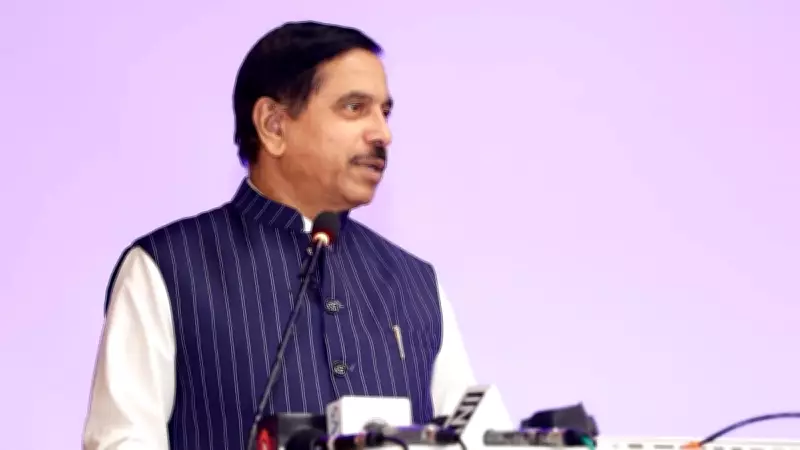
Union Minister for New and Renewable Energy, Pralhad Joshi, announced on Thursday that India has assessed over 102 gigawatt-peak (GWp) of floating solar potential across its water bodies. Speaking at a conference on renewable energy, Joshi emphasized that reservoirs and other water bodies are emerging as valuable assets for generating clean energy through floating solar projects.
Dedicated Scheme on the Horizon
Joshi revealed that a dedicated scheme for floating solar is in the works, aimed at accelerating the deployment of such projects. The scheme will provide policy support and financial incentives to harness this untapped potential. He noted that floating solar offers several advantages, including higher efficiency due to cooling effects from water, reduced land use, and lower evaporation losses from reservoirs.
Current Status and Future Targets
India currently has over 2 GW of floating solar capacity installed or under development, with major projects in states like Kerala, Uttar Pradesh, and Madhya Pradesh. The government aims to add at least 10 GW of floating solar capacity by 2030 as part of its broader renewable energy target of 500 GW from non-fossil sources. Joshi stressed that floating solar would play a crucial role in meeting peak power demand and ensuring grid stability.

Benefits Beyond Energy Generation
Beyond electricity generation, floating solar panels help conserve water by reducing evaporation, which is critical for water-stressed regions. They also improve water quality by limiting algae growth and can be integrated with hydropower plants to create hybrid systems. Joshi called upon state governments and private developers to collaborate on identifying suitable water bodies and expediting project approvals.
Industry Response
Industry experts welcomed the announcement, stating that a dedicated scheme would provide much-needed clarity and boost investor confidence. They highlighted that floating solar is particularly viable for states with large reservoirs, such as Maharashtra, Gujarat, and Tamil Nadu. However, challenges remain, including high initial costs, maintenance issues, and environmental concerns related to aquatic ecosystems. The minister assured that these would be addressed through research and pilot projects.
Joshi concluded by reiterating the government's commitment to promoting innovative renewable energy technologies. He urged stakeholders to leverage India's vast water resources to achieve energy security and climate goals. The detailed scheme is expected to be unveiled in the coming months.