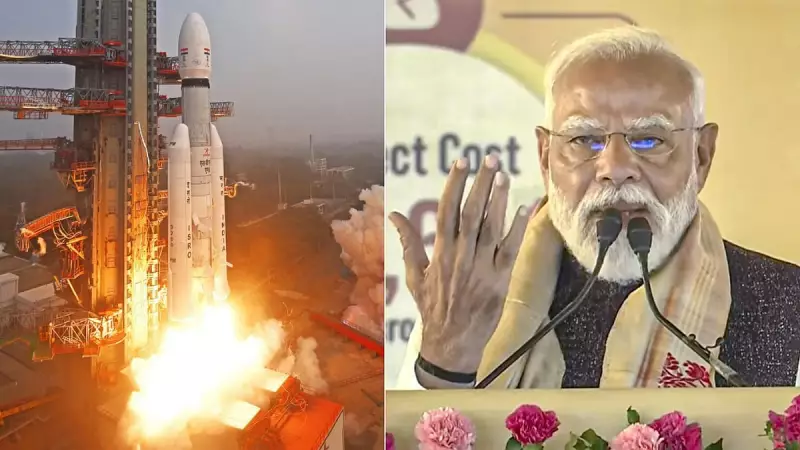
India's space ambitions received a significant boost as its heaviest launch vehicle, the LVM3, successfully placed a batch of 46 foreign satellites into orbit. The mission, conducted by the Indian Space Research Organisation (ISRO), marks a pivotal moment for the nation's growing footprint in the highly competitive global commercial launch market.
A Milestone Mission from Sriharikota
The launch took place at 9 a.m. on Sunday, October 23, 2022, from the Satish Dhawan Space Centre in Sriharikota, Andhra Pradesh. The workhorse LVM3 rocket, formerly known as the GSLV Mk-III, performed flawlessly, deploying all 46 satellites belonging to the global communications company OneWeb into their intended orbits approximately 75 minutes after liftoff.
This mission was particularly notable as it was the first dedicated commercial launch for the LVM3 rocket, executed under a contract with NewSpace India Limited (NSIL), ISRO's commercial arm. The successful deployment underscores the rocket's reliability and India's capability to handle complex multi-satellite deployment missions for international clients.

Leadership Hails a Strengthened Global Position
Prime Minister Narendra Modi was quick to commend the ISRO and NSIL teams on the mission's success. In a social media post, he stated that the accomplishment "reinforces India's growing role in the global commercial launch market." He emphasized that the launch is not just a commercial success but a testament to the strides made by the country's scientists and the space sector's technological prowess.
The sentiment was echoed by other leaders and space experts who view this mission as a clear indicator of India's evolving position. From being a nation reliant on foreign launches for its own satellites, India has transformed into a trusted and cost-effective launch service provider for the world. The LVM3, with its proven track record including the landmark Chandrayaan missions, is now a formidable contender in the medium-lift launch segment.
Implications for India's Space Economy
The flawless execution of this commercial mission has several key implications:
- Market Credibility: Successfully launching 46 satellites in one go for a high-profile client like OneWeb significantly enhances India's credibility. It demonstrates precision, mission management expertise, and the ability to meet stringent client timelines.
- Economic Potential: The global satellite launch market is valued in the billions of dollars. By capturing a larger share of this market, India can generate substantial revenue for its space program, foster job creation in the high-tech sector, and boost its overall space economy.
- Public-Private Synergy: The mission highlights the effective model of NSIL handling commercial contracts while ISRO provides the launch vehicle and expertise. This synergy is crucial for scaling up operations and attracting more international business.
- Strategic Independence: A robust commercial launch program reduces dependency on foreign agencies for India's own strategic and commercial satellite launches, ensuring greater autonomy in space access.
With this launch, India has not only served a key customer but also sent a strong signal to other global satellite operators and constellation developers. The combination of proven technology, competitive pricing, and high success rates makes the Indian launch service an attractive option in an era where satellite constellations for internet and communication are rapidly expanding.
The journey of the LVM3 rocket, from launching India's lunar and interplanetary missions to becoming a commercial workhorse, mirrors the nation's own trajectory in space. As the global demand for launch services grows, India, with missions like these, is firmly positioning itself as a reliable and ambitious partner in the final frontier.