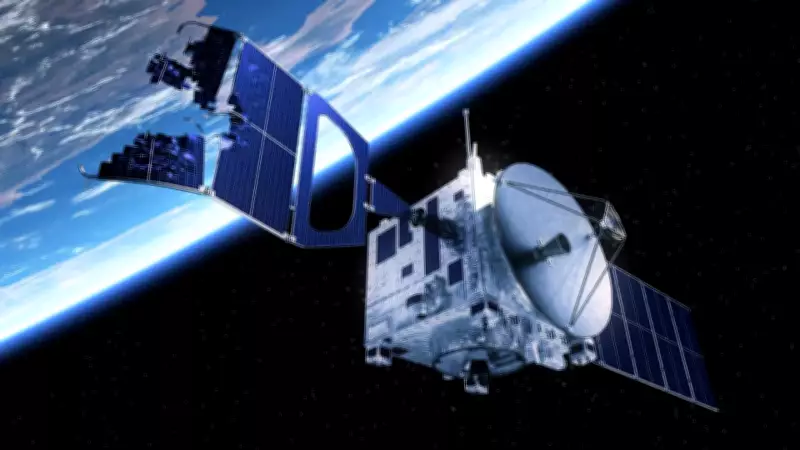
India's NavIC Navigation System Expands with 11 Satellites, 8 Operational
The Indian government has officially confirmed the launch of eleven satellites under its indigenous regional navigation system, NavIC. In a written reply presented to the Lok Sabha on Wednesday, Minister of State Jitendra Singh disclosed that eight of these satellites are currently operational, marking a significant milestone in India's quest for technological self-reliance in positioning and navigation services.
Operational Status and Service Breakdown
Of the eight operational satellites, three are actively broadcasting navigation signals essential for positioning and timing. The remaining five satellites provide specialized one-way messaging services, which are crucial for communication in remote areas and during emergencies. This dual-functionality architecture ensures NavIC can serve both civilian and strategic needs effectively.
NavIC, which stands for Navigation with Indian Constellation, is designed to deliver comprehensive Position, Navigation and Timing (PNT) services over the entire Indian landmass and a region extending up to 1,500 kilometers beyond its borders. The system's coverage area includes neighboring countries and critical maritime routes, enhancing regional security and economic activities.

Expanding Applications Across Sectors
The government is actively working to integrate NavIC across multiple vital sectors. Discussions are ongoing with the Airports Authority of India and the Ministry of Civil Aviation regarding the adoption of NavIC in air traffic management systems. Currently, India relies on its satellite-based augmentation system, GAGAN, for air navigation services, but NavIC integration would provide additional redundancy and independence.
The Department of Space (DoS) is spearheading efforts to expand NavIC's utilization in several key areas:
- Real-time train tracking for improved railway safety and efficiency
- Fishing vessel communication and support systems to enhance maritime security
- Vehicle location tracking for passenger safety in public and private transport
- Dissemination of Indian Standard Time (IST) with high precision
Strategic Importance and Future Roadmap
NavIC possesses a crucial strategic dimension through its encrypted Restricted Service, which is exclusively available to authorized users including India's defence forces. This secure navigation and timing support enables military operations independent of foreign systems like GPS, reducing vulnerability to external disruptions or denial of service during conflicts.
Officials from the Department of Space confirmed they are actively pursuing the complete operationalization of NavIC and associated satellite systems for secure navigation services. The comprehensive roadmap includes:
- Completing the base-layer constellation to ensure consistent coverage
- Enhancing service capabilities in alignment with evolving user requirements
- Incorporating indigenous technologies such as space-grade atomic clocks to boost technological self-reliance
Technical Specifications and Capabilities
Developed by the Indian Space Research Organisation (ISRO), NavIC—originally known as the Indian Regional Navigation Satellite System (IRNSS)—represents India's ambitious regional satellite navigation initiative. The system was designed with a constellation of seven satellites: three in geostationary orbit and four in inclined geosynchronous orbit, supported by a network of ground stations operating continuously.
NavIC offers two distinct services: the Standard Positioning Service (SPS) for civilian users and the Restricted Service (RS) for strategic users. The system transmits signals in L5 and S bands, with plans to introduce a new civilian L1 band signal to improve interoperability with global navigation satellite systems including GPS (USA), GLONASS (Russia), Galileo (European Union), and BeiDou (China).

According to ISRO technical specifications, NavIC provides position accuracy better than 20 meters and timing accuracy better than 50 nanoseconds. These precision capabilities enable a wide range of applications spanning transportation (road, rail, air and marine), location-based services, personal mobility, surveying and geodesy, resource monitoring, scientific research, time dissemination and synchronization, and safety-of-life alert dissemination.
The expansion of NavIC represents a significant step toward India's technological sovereignty in critical navigation infrastructure, reducing dependence on foreign systems while enhancing national security and economic resilience.