

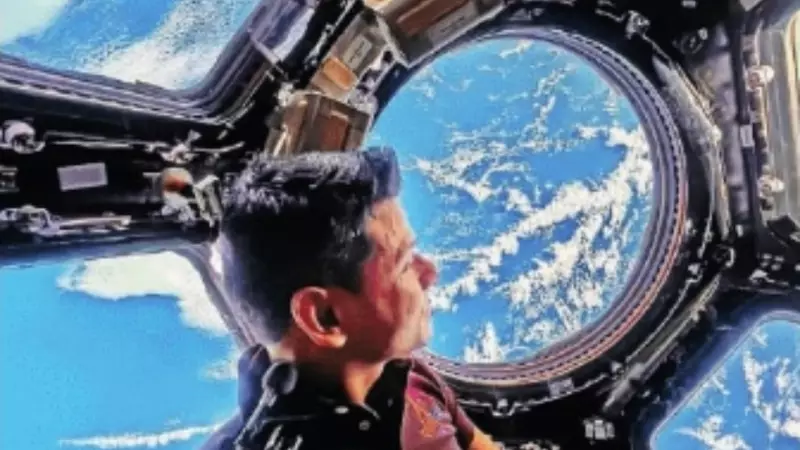
As India prepares to launch its own space station by 2028, valuable insights are emerging from veterans who have experienced life aboard the International Space Station. Group Captain Shubhanshu Shukla, who spent time on the ISS, provides a crucial perspective on what the pioneering orbital platform achieved and where it faced challenges.
International Cooperation: The ISS Legacy
Reflecting on his mission, Shubhanshu Shukla highlights that the space station's most significant achievement was demonstrating how long-term engineering goals can align with international cooperation. During his 20-day mission, the station hosted 11 crew members from six different countries working together on more than 60 experiments while also engaging with students worldwide.
The ISS veteran emphasizes that this platform, built with 1990s technology, continues to support new scientific discoveries and collaborative work. He describes the station as representing continuity, shared objectives, and an operational approach that keeps crew members focused on their tasks rather than terrestrial boundaries.

Design Strengths and Limitations
According to Shukla, the ISS's modular design proved to be its greatest strength. The station continued accepting new modules and power systems long after the original plans were finalized. Standardized interfaces allowed equipment from different space agencies to function together seamlessly.
The capability to repair and upgrade the station while in orbit kept it operational and relevant over decades. However, Shukla notes the station wasn't designed to keep pace with rapidly evolving technologies. As systems advanced, the interior became increasingly cluttered with cables, laptops, and temporary additions.
This presents a critical lesson for India's space station designers: future stations must maintain flexibility without becoming congested with technological add-ons.
Strategic Partnerships and Future Planning
Shukla's experience training with multiple international space agencies shaped his perspective on what India should prioritize. He observed how teams from Japan, Europe, the United States, and India brought different methodologies but shared common objectives. Integrated training, shared simulations, and constant coordination built the trust essential for mission success.
As the ISS approaches retirement, Shukla suggests India must first answer a fundamental question: what is the station's primary purpose? The International Space Station served as a laboratory, testing ground, and shared platform, demonstrating both the value of open access and the risks of slow technological adaptation.
For the Bharatiya Antariksh Station planned for low Earth orbit by 2028, Shukla recommends retaining the ISS's modularity, which allows hardware installation in phases. However, he stresses that modularity only works effectively with a long-term roadmap and standardized systems.
He also emphasizes operational flexibility, noting that astronauts in orbit become generalists handling tasks that cannot be fully rehearsed on Earth. India's space station should anticipate and accommodate new technologies without requiring major redesigns, benefiting from lessons gathered over 25 years of ISS operations.






