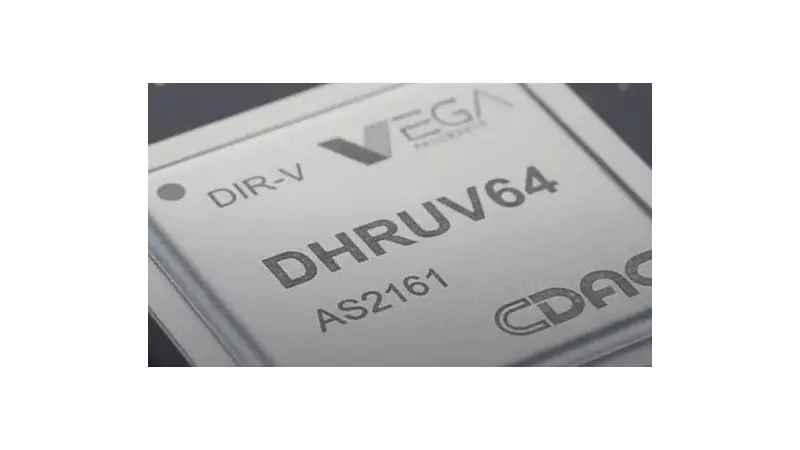
In a significant stride towards technological self-reliance, India has proudly unveiled its first completely indigenous 64-bit microprocessor. Named the Dhruv64 chipset, this development stands as a cornerstone achievement under the government's flagship Aatmanirbhar Bharat (Self-Reliant India) initiative. The announcement marks a pivotal moment in the nation's quest to reduce dependency on foreign technology and establish itself as a formidable player in the global semiconductor and computing hardware landscape.
The Genesis and Showcase of Dhruv64
The Dhruv64 microprocessor was officially showcased to the public and industry stakeholders recently, drawing attention from the tech community and policymakers alike. This processor is not just another component; it is a testament to India's growing capabilities in cutting-edge electronics design and manufacturing. The chip is built on the open-standard RISC-V instruction set architecture (ISA), which is crucial as it allows India to avoid the licensing fees and restrictions associated with proprietary architectures like ARM or x86.
Developed through a collaborative effort involving Indian academia, research institutions, and the burgeoning private sector, the Dhruv64 project symbolizes a successful public-private partnership model. Its creation involved intricate design, verification, and testing processes, all accomplished within the country. The showcase event highlighted the chip's operational capabilities and its potential for deployment across a wide array of applications.

Technical Prowess and Strategic Importance
At its core, the Dhruv64 is a 64-bit processor, which means it can handle large amounts of data and complex computations efficiently, making it suitable for modern computing needs. By adopting the RISC-V architecture, India aligns itself with a global movement towards open-source hardware, which fosters innovation, collaboration, and cost-effectiveness. This strategic choice provides sovereign control over the technology, a critical factor for national security and long-term technological planning.
The development of such an indigenous microprocessor carries immense strategic importance for several key sectors:
- Defence and Aerospace: Secure, homegrown chips are vital for communication systems, navigation, and surveillance equipment.
- Telecommunications: As India rolls out 5G and beyond, controlling the underlying hardware ensures network security and reliability.
- Consumer Electronics and IoT: From smartphones to smart devices, the Dhruv64 can power the next generation of Made in India gadgets.
- Supercomputing and Data Centres: It lays the groundwork for future indigenous high-performance computing systems.
This move directly reduces the risks associated with supply chain disruptions and geopolitical tensions that can affect the import of critical technology.
Fueling the Aatmanirbhar Bharat Vision
The unveiling of the Dhruv64 chipset is a direct and tangible outcome of the Aatmanirbhar Bharat campaign, which aims to transform India into a global manufacturing and innovation hub. The government has been actively promoting the design and manufacturing of semiconductors within the country through supportive policies, financial incentives, and infrastructure development. This chipset is a flagship example of how these policies are translating into real, world-class products.
Beyond the technical achievement, the project is expected to have a cascading effect on the economy. It will:
- Create high-skilled jobs in VLSI design, embedded systems, and hardware engineering.
- Attract further investment into the domestic electronics manufacturing ecosystem.
- Inspire a new wave of Indian startups to innovate around indigenous hardware platforms.
- Strengthen the academic curriculum in engineering colleges with practical, state-of-the-art projects.
The success of Dhruv64 demonstrates that with focused effort and collaboration, India can not only participate but also excel in the highly competitive and capital-intensive field of microprocessor design.

The Road Ahead and Global Implications
While the showcase is a moment of celebration, the real work begins with commercialization and widespread adoption. The next steps involve ramping up production, ensuring competitive performance and power efficiency, and convincing device manufacturers to integrate the Dhruv64 into their products. The government and developers must work together to create a robust ecosystem of software, development tools, and support for this new platform.
Globally, India's entry into the sovereign microprocessor club with an open-source architecture like RISC-V is a noteworthy event. It positions the country as a potential leader in the open hardware movement and offers an alternative to the existing duopoly in chip architectures. This could have significant implications for other nations seeking technological independence, potentially making India a partner and exporter of such critical technology in the future.
In conclusion, the Dhruv64 chipset is far more than a piece of silicon; it is a symbol of national ambition and technological prowess. Its development proves that India has the talent, the will, and the strategy to achieve self-reliance in one of the most complex and foundational technologies of the modern era. As the Dhruv64 paves the way, it lights the path for a more self-sufficient and innovative technological future for the nation.