

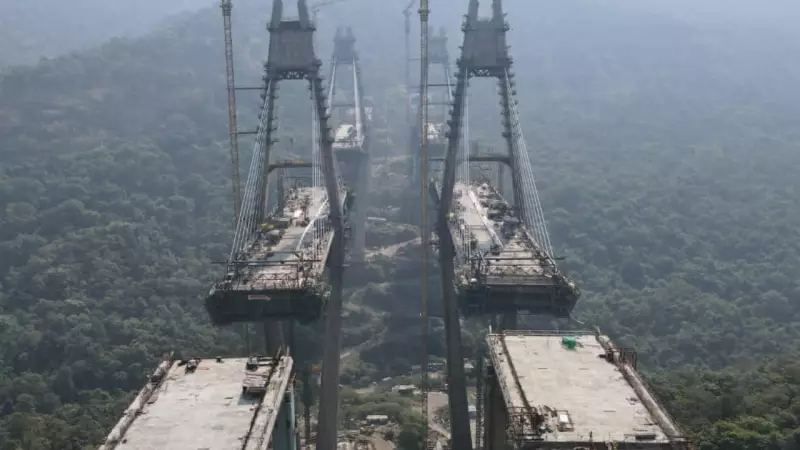
In a remarkable feat of modern engineering, India's tallest cable-stayed road bridge is taking shape high in the Sahyadri mountain ranges. Soaring 132 metres above ground in Lonavala's Tiger Valley, this colossal structure is a critical part of the Mumbai-Pune Expressway Missing Link project. It promises to significantly reduce travel distance and time while providing a safer, more modern route through one of Maharashtra's most challenging terrains.
Conquering History and Height with Advanced Techniques
The construction site is steeped in history, located near the battlefield where the legendary Maratha king, Chhatrapati Shivaji Maharaj, outmanoeuvred a much larger Mughal army in 1661. Today, engineers are waging a different battle against gravity, wind, and the elements. They are employing cutting-edge methods like self-climbing shuttering systems to build the bridge's towering 182-metre-high pylons. For the deck, cantilever form travellers are in use, and an impressive fleet of four tower cranes operates in unison at extreme heights to ensure both speed and surgical precision.
The project is divided into two main packages. Package I involves constructing two tunnels measuring 1.75 km and 8.92 km in length. Package II is even more extensive, covering two viaducts (850 m and 650 m), widening 5.86 km of the existing Expressway, and building over 10 km of approach and slip roads. The 650-metre viaduct will feature the project's record-breaking pylons, the tallest in the country.

Human Courage Meets Extreme Challenges
Behind the steel and concrete are teams of skilled labourers and engineers working under perilous conditions. They perform complex tasks like welding and lifting heavy segments while perched on narrow ledges above deep valleys. Despite world-class safety protocols, the sheer fear of working at such dizzying heights has led some workers to leave. The endeavour demands extraordinary patience, courage, and focus, especially when dense fog, heavy monsoon rains, and sudden wind gusts of up to 100 kmph reduce visibility to just a few metres.
These geographical and weather challenges have collectively delayed the project by approximately two years, with further disruptions caused by the COVID-19 pandemic. Local villagers and officials acknowledge that the region's narrow ridges, heavy rainfall, and high-altitude winds make consistent progress a formidable task. Yet, through meticulous planning and advanced technology, the teams maintain stringent international standards for both safety and structural quality.
A Legacy of Connectivity and Environmental Benefit
Upon its completion, the bridge will serve as a vital bypass for the notoriously congested and winding Khandala Ghat section. This will shorten the Expressway by over six kilometres and slash travel time by an estimated 25 minutes. Beyond convenience, this more direct route is expected to reduce vehicular emissions in the ecologically sensitive ghat area, contributing to cleaner air and a smoother, more environmentally conscious commute for the thousands who travel between India's financial capital and its cultural hub.
This bridge is more than just an infrastructure project; it is a testament to human ingenuity. Centuries after Shivaji Maharaj used the Sahyadri terrain for strategic defence, today's engineers are using strategy, courage, and technology to conquer the same mountains for progress and enhanced connectivity.






