

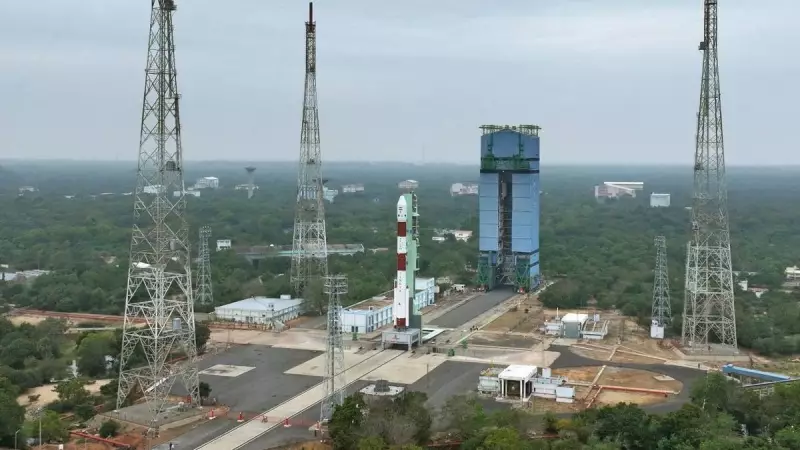
The Indian Space Research Organisation (ISRO) has officially confirmed a performance anomaly in the third stage of its Polar Satellite Launch Vehicle (PSLV) during the C62 mission. The launch, which took place on January 12, 2026, successfully deployed its primary payloads into orbit, but the space agency noted an irregularity in the functioning of the rocket's third stage.
Details of the Launch and Anomaly
The PSLV C62 mission lifted off as scheduled from the Satish Dhawan Space Centre in Sriharikota. The primary objective was to place multiple satellites into their intended orbits. While the initial phases of the flight, including the first and second stage separations, proceeded nominally, engineers observed a deviation in the performance parameters of the third stage during its burn phase.
ISRO's post-launch analysis indicates that despite the anomaly, the mission's key goals were achieved. The satellites were successfully injected into their planned orbits. However, the agency has initiated a detailed review to understand the root cause of the irregularity in the third stage's propulsion system. This stage is crucial for providing the final velocity boost to place satellites into precise orbits.

Mission Success and Technical Investigation
Emphasizing the mission's overall success, ISRO stated that all customer satellites are operating as intended. The anomaly did not impact the final orbital placement. The agency's swift acknowledgment of the issue highlights its commitment to transparency and continuous improvement in launch vehicle reliability.
A dedicated failure analysis committee has been formed to investigate the incident. This committee will scrutinize telemetry data and conduct thorough tests to pinpoint the exact cause. The findings will be crucial for ensuring the robustness of future PSLV missions, a workhorse rocket with an otherwise stellar track record.
Implications for Future Launches
This event marks a rare occurrence in the recent history of the highly reliable PSLV platform. ISRO has assured that the investigation's outcomes will be incorporated into the design and quality assurance processes for upcoming launches. The agency maintains that such reviews are a standard part of its protocol to enhance mission success rates.
The PSLV remains a critical asset for India's space program, supporting both domestic and international satellite deployment needs. This incident is viewed not as a major setback, but as an opportunity for technical refinement. ISRO's proactive approach in identifying and studying the performance anomaly underscores its systematic methodology towards achieving flawless mission execution.






