

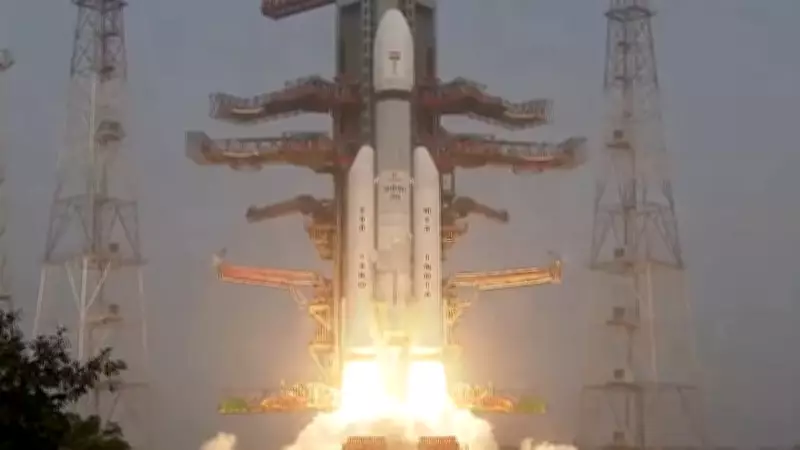
In a significant development for India's space program, the Indian Space Research Organisation (ISRO) is gearing up for another attempt at launching its Polar Satellite Launch Vehicle (PSLV) in June, as confirmed by Union Minister Jitendra Singh. This announcement comes after the space agency faced two consecutive failures, raising concerns but also demonstrating resilience in its pursuit of space exploration.
Recent Setback in PSLV Mission
Last month, ISRO experienced a notable setback when its PSLV-c62 rocket encountered an anomaly during a crucial mission. The rocket was carrying a payload of 16 satellites, which included a foreign earth observation satellite intended for international collaboration. The failure was attributed to a technical issue in the third stage of the rocket, leading to an unsuccessful deployment of the satellites into orbit.
Analysis of the Failure
Preliminary investigations into the incident have focused on the third stage of the PSLV, a critical component responsible for propelling the payload into its designated orbit. Experts suggest that such anomalies, while rare, are part of the inherent risks in space missions. ISRO's team of scientists and engineers is diligently working to identify the root cause and implement corrective measures to prevent similar occurrences in future launches.

Historical Context of PSLV Launches
The PSLV has been a workhorse for ISRO, with a generally high success rate over the years. However, the recent failures highlight the challenges in maintaining consistency in space technology. Prior to last month's incident, ISRO had faced another failure, underscoring the need for rigorous testing and quality assurance in rocket manufacturing and launch operations.
Impact on India's Space Ambitions
These setbacks, though temporary, could have implications for India's space ambitions, including plans for commercial satellite launches and international partnerships. The failure to deploy the foreign earth observation satellite, in particular, might affect collaborations and revenue streams. Nonetheless, ISRO's commitment to a June launch attempt signals a proactive approach to overcoming obstacles and advancing the nation's space capabilities.
Minister Jitendra Singh's announcement reassures stakeholders of ISRO's dedication to transparency and improvement. The upcoming launch in June will be closely watched by the global space community, as it represents a critical step in restoring confidence and demonstrating technological prowess.
As ISRO prepares for this pivotal mission, the focus remains on enhancing reliability and ensuring that lessons learned from past failures are integrated into future endeavors. The success of the June launch could pave the way for more ambitious projects, including manned missions and deeper space exploration.






