

ISRO Releases Findings on NVS-02 Satellite Orbit Failure
More than a year after a significant setback to India's navigation satellite program, the Indian Space Research Organisation (ISRO) has publicly disclosed the findings of an apex committee investigation. The probe focused on the NVS-02 spacecraft's failure to achieve its designated orbit on January 29, 2025.
Root Cause: Pyro System Electrical Failure
The committee conclusively traced the anomaly to a critical failure within the spacecraft's pyro system. According to the detailed findings, the electrical drive signal necessary to activate the pyro valve in the oxidizer line of the engine failed to reach its target. This engine was specifically designed for the crucial orbit-raising maneuvers.
The most probable cause identified was the disengagement of at least one contact in both the main and redundant connector paths. Despite the built-in redundancy intended to prevent such failures, the essential electrical command required to trigger the pyro valve was completely blocked, rendering the system inoperative.

Mission Timeline and the Anomaly
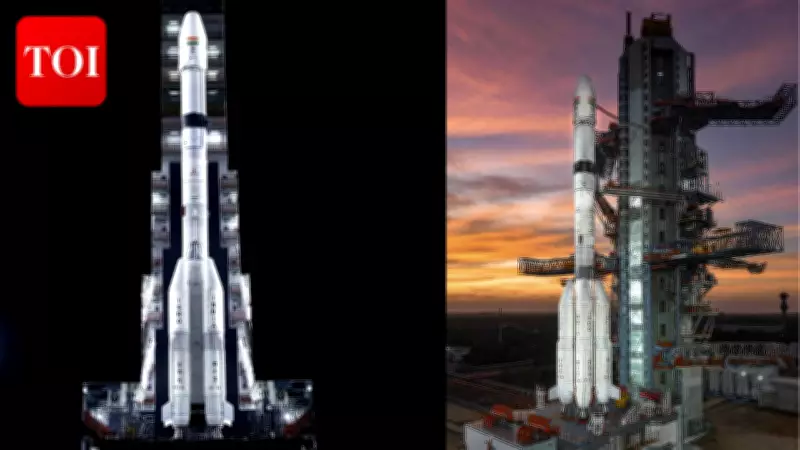
The NVS-02 satellite was successfully launched aboard the GSLV-F15 rocket on January 29, 2025. It was initially injected into an elliptical transfer orbit with precise parameters: an apogee of 37,785 kilometers, a perigee of 170 kilometers, and an inclination of 20.8 degrees.
Following separation from the launch vehicle, the spacecraft executed a series of autonomous operations flawlessly. These included the deployment of its solar panels and the stabilization of its orientation to ensure adequate power generation. However, the subsequent planned maneuvers to transition from the elliptical transfer orbit to the final circular orbit could not be executed due to the pyro system failure.
Investigation and Corrective Actions
In response to the anomaly, ISRO promptly constituted an apex committee to conduct a thorough review. The panel meticulously analyzed telemetry data and performed extensive simulation studies to isolate the fault. The statement released by ISRO on Wednesday represents the first comprehensive public account of the incident's technical causes.
The committee has recommended a suite of corrective measures aimed at enhancing system redundancy and improving the overall reliability of pyro system operations for future missions. ISRO confirmed that these recommendations have already been implemented.
"The updated systems were successfully flown on the CMS-03 mission, launched on November 2, 2025, aboard the LVM-3 M5 vehicle. The pyro systems performed as intended, and the satellite was accurately placed in its designated orbit," ISRO stated. The space agency further emphasized that these enhanced protocols will be rigorously followed in all applicable future missions to prevent the recurrence of similar failures.
Parallel Investigation into PSLV-C62 Failure
In a related development, ISRO has also constituted a Failure Analysis Committee (FAC) to investigate the PSLV-C62 mission failure that occurred on January 12 of this year. This committee is chaired by former Principal Scientific Advisor Professor K. VijayRaghavan and co-chaired by former ISRO Chairman S. Somanath.
The formation of the FAC follows the submission of a report by an internal expert group, previously referred to as the "data analysis committee" (DAC). The detailed findings from the DAC's initial analysis have not been made public. The newly formed FAC will now undertake a comprehensive review to determine the causes behind the PSLV-C62 anomaly.






