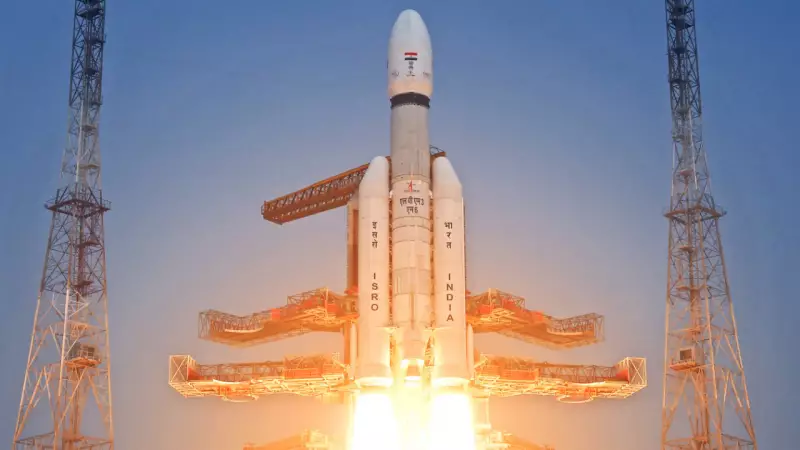
In a landmark achievement for India's space sector, the Indian Space Research Organisation (ISRO) successfully launched its heaviest commercial payload to date on Wednesday. The LVM3-M6 rocket, often nicknamed 'Bahubali', flawlessly placed the United States' next-generation BlueBird Block-2 communication satellite, weighing a massive 6,100 kilograms, into a precise low earth orbit (LEO).
A Historic Launch and National Pride
Prime Minister Narendra Modi was quick to congratulate the national space agency on the monumental success. In a post on social media platform X, the PM stated that the mission marks "a significant stride in India's space sector" and a proud milestone. He emphasized that this was the heaviest satellite ever launched from Indian soil.
This mission represents the sixth operational flight of the heavy-lift LVM3 launch vehicle. It shatters the vehicle's previous record, which was set on November 2 when it placed the approximately 4,400 kg communication satellite 03 into a geosynchronous transfer orbit (GTO). The successful deployment of the 6.1-tonne US payload into LEO is a clear demonstration of India's growing launch capabilities.

Strategic Significance and Global Impact
The BlueBird Block-2 satellite is designed to provide high-speed 4G and 5G connectivity directly to smartphones, representing a leap in telecommunications technology. This launch is the second major US satellite deployment from India this year, following the joint Indo-US NISAR Earth-observation satellite mission.
The mission's success carries profound strategic weight. Placing a satellite of this class into LEO is critical in the modern era of direct-to-device and hybrid satellite-terrestrial networks. Heavier satellites allow for:
- Higher payload consolidation and fewer required orbital assets.
- Simplified orbital phasing and management.
- Lower per-user costs for mass-market connectivity services.
This capability meaningfully alters how global satellite communication players plan their constellation architecture, manage insurance risks, and diversify their launch options.
India's Commercial Launch Leadership
Space Minister Jitendra Singh called it a "moment of glory for the country," crediting the progress made over the last decade. He highlighted that while American satellites have been launched from Sriharikota before, this mission proves India's capacity to handle payloads as heavy as 6,000 kg.
The numbers underscore India's established role in the global commercial launch market. As of late December 2025, ISRO has launched at least 234 satellites for the United States. Since the first commercial US satellites were launched on PSLV-C30 in 2015, American payloads constitute the largest share of the 434 foreign satellites launched by ISRO. These commercial missions have contributed nearly $143 million in foreign exchange revenue for India.
Industry experts see this as a watershed moment. Subba Rao, President of the Space Industry Association India, noted that the mission signals India's entry into the core commercial LEO deployment landscape. He emphasized that it builds global confidence in India's industrial readiness, reliability, and ability to support large-scale constellations over the long term.
The success was also a testament to the growing private sector ecosystem. Companies like Ananth Technologies Pvt Ltd (ATL), a long-standing partner, contributed critical flight hardware, avionics systems, and precision subsystems for the LVM3 rocket, showcasing the collaborative strength of India's space industry.