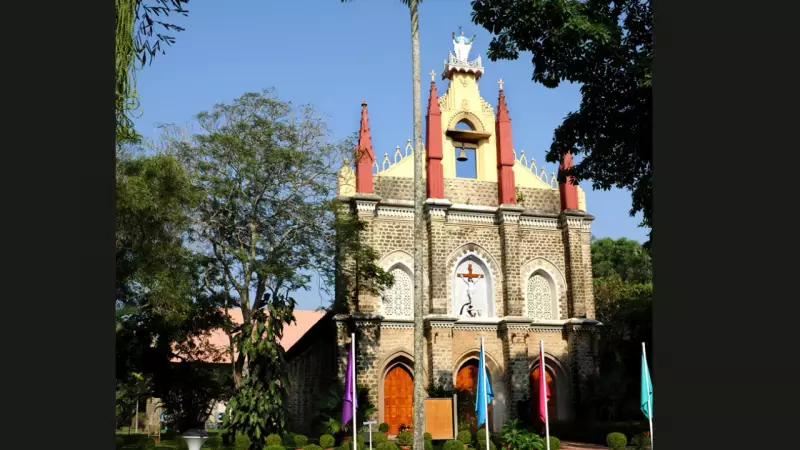
ISRO's Humble Beginnings: From Church to Space Museum
Most people picture space missions with massive labs, gleaming buildings, and expensive gadgets. ISRO did not start that way. Every child should hear this remarkable story.
The Church That Launched India's Space Dreams
India's space agency, ISRO, began its journey in a church. During the 1960s, a small group of scientists worked from St Mary Magdalene Church in Thumba, Kerala. They stored rockets inside the church itself. The Bishop House served as the office for the Director of TERLS.
In 1985, the church received a complete renovation. It transformed into the VSSC Space Museum. Today, it is hard to imagine such modest origins given ISRO's current achievements.

Resourcefulness and Grit of Early Scientists
Those first scientists showed incredible grit and resourcefulness. They lacked fancy machines and unlimited budgets. Instead, they relied on ideas, curiosity, and sheer determination.
Rockets and their parts did not arrive on trucks or forklifts in those early days. Sometimes, scientists carried them on bicycles. They tested small rockets, studied propulsion, and checked instruments. Their work laid the foundation for India's entire space program from scratch.
The church, the bicycles, and the tiny teams became symbols of ISRO's "do more with less" mindset. This philosophy remains strong within the organization today.
From Humble Start to Global Achievements
Fast forward several decades, and ISRO now sends satellites into space. It reaches the Moon and even Mars while keeping costs remarkably low.
Chandrayaan-1 put India on the lunar map by discovering water molecules on the Moon. Mangalyaan successfully traveled to Mars. NAVIC, India's own navigation system, offers greater accuracy than GPS in some parts of the country, though most phones do not fully utilize it.
Learning from Failures and Building Success
These amazing missions did not happen overnight. ISRO built them over decades through small experiments and learning from failures. The agency does not hide its mistakes. It studies them, shares lessons, and uses that knowledge to improve.
This approach helps ISRO achieve so much with relatively limited resources. The journey from a Kerala church to lunar and Mars missions showcases India's spirit of innovation and perseverance.