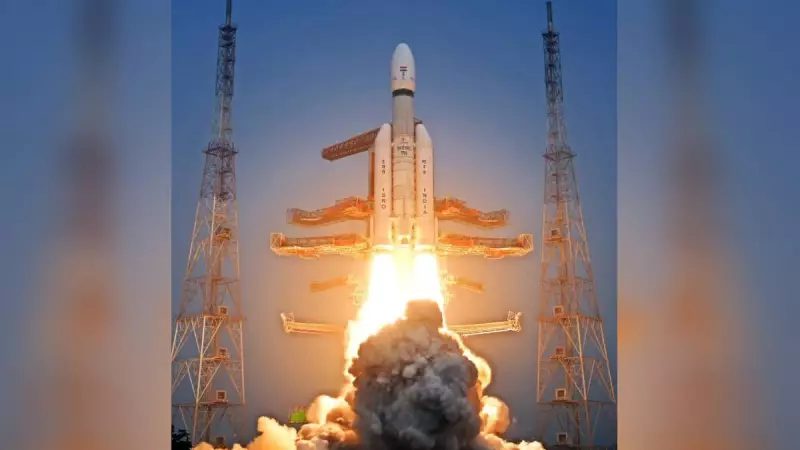
In a landmark achievement for India's space program, the Indian Space Research Organisation (ISRO) has successfully launched its heaviest commercial satellite to date. The historic mission was carried out by the reliable Launch Vehicle Mark-3 (LVM3) from the Satish Dhawan Space Centre in Sriharikota on Tuesday, December 24, 2024.
A New Benchmark in Launch Capability
The star of the mission was the BlueBird-2 Block 2 communication satellite, weighing a massive 6,350 kilograms. This launch firmly establishes India's capability to handle heavier payloads in the competitive global commercial space market. ISRO Chairman, S. Somanath, hailed the success as a testament to the nation's growing prowess in space technology and a major step towards more ambitious interplanetary missions.
The LVM3 rocket, which has become the workhorse for heavy-lift missions, performed flawlessly. Approximately 19 minutes after liftoff, the rocket injected the sophisticated satellite into its intended Geosynchronous Transfer Orbit (GTO). The entire sequence, from launch to satellite separation, was executed with precision, marking another textbook mission for ISRO's launch team.

Strategic Significance and Future Roadmap
This successful deployment of the BlueBird-2 satellite is not just a technical feat but holds immense strategic importance. The satellite is designed to enhance communication services over a vast region. More importantly, the mission validates the upgraded capabilities of the LVM3 launch vehicle, proving its reliability for critical and heavy payloads.
Chairman Somanath emphasized that this success directly contributes to the confidence required for upcoming, complex missions. "The success of this mission gives us great confidence for the future," Somanath stated. He specifically linked this achievement to India's ambitious Gaganyaan human spaceflight program and future plans for lunar and interplanetary exploration. The robust performance of the LVM3 is a cornerstone for these endeavors.
The mission underscores a key dual objective for ISRO: advancing space science while simultaneously securing a larger share of the global commercial satellite launch market. By reliably launching heavier satellites, India positions itself as a cost-effective and dependable partner for international clients.
Solidifying India's Position in the Global Space Arena
The December 24th launch is a clear indicator of India's rapidly evolving space ecosystem. It demonstrates a seamless integration of engineering excellence, mission planning, and operational execution. The ability to consistently launch satellites weighing over six tonnes opens new avenues for both domestic and international collaboration.
This achievement builds upon a series of recent successes by ISRO, including the Chandrayaan-3 lunar mission. It sends a powerful message about the nation's self-reliance in space technology and its readiness to undertake even more challenging projects. The focus now shifts to leveraging this enhanced launch capability for scientific discovery, national development, and commercial growth.
As India eyes a manned mission to space and deeper solar system exploration, the reliable roar of the LVM3, proven once again in this historic launch, will be the sound paving the way forward.