

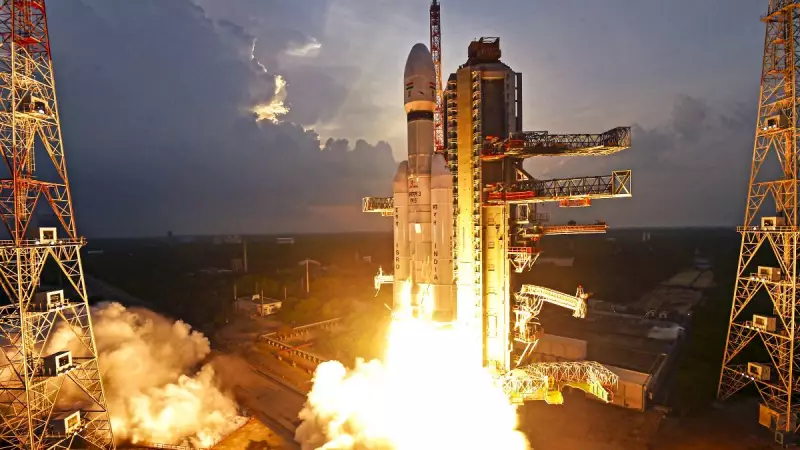
In an exclusive revelation, the Chairman of the Indian Space Research Organisation (ISRO), S. Somanath, has laid out a definitive and ambitious roadmap for India's human spaceflight ambitions. The plan culminates in the establishment of the indigenous 'Bharat Space Station' by the year 2027, following a crucial milestone: the launch of India's first crewed Gaganyaan mission in 2026.
The Strategic Roadmap: From Gaganyaan to a Home in Orbit
The veteran space scientist detailed a clear, step-by-step strategy. The immediate and paramount focus is the successful execution of the Gaganyaan mission, India's maiden human spaceflight program. Somanath emphasized that the first crewed launch is firmly on schedule for 2026. This mission will send Indian astronauts, or 'Vyomnauts', into a Low Earth Orbit, marking the country's entry into the elite club of nations capable of human spaceflight.
Following this historic flight, ISRO will not rest. The experience and technological confidence gained from Gaganyaan will be directly channeled into the next monumental project. "We want to have a space station by 2027," Somanath stated unequivocally. This orbiting outpost, tentatively named the 'Bharat Space Station', is envisioned to be a platform for sustained human presence in space, enabling cutting-edge microgravity research and serving as a testbed for future interplanetary missions.

Building Blocks and Technological Foundations
The path to the space station is intricately linked to the Gaganyaan program's development. Key technologies being perfected for the crewed mission will form the backbone of the station. These include:
- The Human-Rated Launch Vehicle (HLVM3): The reliable rocket that will carry both the Gaganyaan crew capsule and, subsequently, modules of the space station.
- Life Support and Habitat Systems: The critical systems that maintain a safe, earth-like environment for astronauts, developed and tested for Gaganyaan's crew module.
- Orbital Rendezvous and Docking Technology: A vital capability for assembling a space station by connecting multiple modules launched separately.
Somanath highlighted that the initial version of the Bharat Space Station will be a compact structure, designed for short-term missions. This pragmatic approach allows ISRO to achieve the goal within the aggressive timeline while establishing the necessary operational protocols. The station is expected to be placed in an orbit similar to the International Space Station, at an altitude of approximately 400 kilometers.
Implications for India's Space Ambitions
The successful realization of this roadmap would represent a quantum leap for India's space capabilities. It positions the nation not just as a participant, but as a leading architect and operator of advanced space infrastructure. The space station will unlock unprecedented opportunities in scientific research, material science, and pharmaceutical development in microgravity conditions.
Furthermore, it lays a concrete foundation for India's long-term goal of an independent lunar mission. The technologies and human spaceflight experience garnered from operating the Bharat Space Station are essential precursors for sending Indian astronauts to the Moon. Somanath's outline transforms India's space vision from aspiration into a tangible, time-bound plan, signaling a new era of confidence and capability for ISRO and the nation.
The coming years are set to be historic. With the Gaganyaan astronaut launch in 2026 serving as the pivotal first step, India is on a determined course to establish its own permanent address in space by the end of this decade.






