

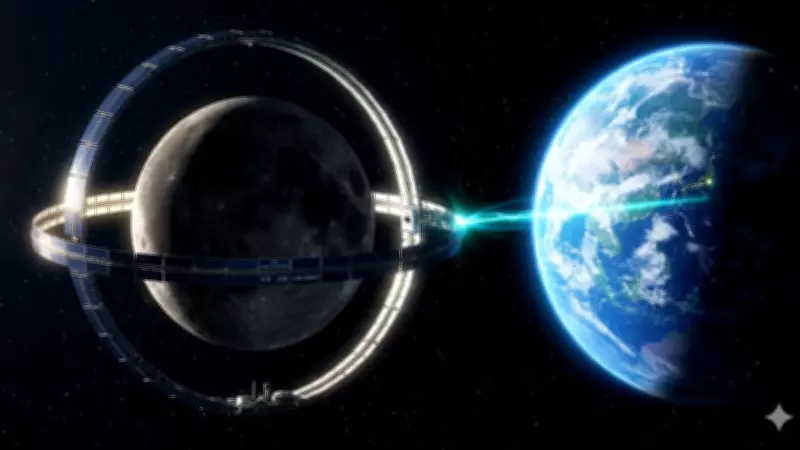
Japan's Visionary Lunar Solar Ring: Harnessing Moon Power for Earth
Imagine a future where darkness is obsolete because humanity has mastered the art of generating boundless electricity rather than conserving it. This seemingly fantastical scenario is precisely what Japanese engineers from Shimizu Corporation have envisioned with their groundbreaking "Lunar Solar Ring" project. This ambitious concept involves constructing a colossal ring of solar panels encircling the Moon's equator to produce endless clean energy for Earth, potentially revolutionizing our global power infrastructure.
What Is the Lunar Solar Power Project?
The Lunar Solar Power initiative, also known as the Luna Ring, represents one of the most massive infrastructure proposals ever conceived. As detailed on Shimizu Corporation's official concept page, the project aims to "harness solar energy by placing solar panels in a belt around the Moon's equator." This solar belt would stretch approximately 11,000 kilometers in length and span hundreds of kilometers in width, making it an unprecedented human-made structure. The proposal gained momentum following Japan's urgent search for alternative power sources after the Fukushima nuclear disaster, highlighting a shift toward innovative energy solutions.
How Would the Moon Generate and Transmit Energy to Earth?
The operational mechanism of the Lunar Solar Ring is both elegant and efficient. Solar cells positioned on the lunar surface would continuously capture sunlight, converting it into electrical energy. This energy would then be transmitted to Earth using advanced technologies such as laser beams or microwaves. Upon arrival, specialized devices called "rectennas" would convert the received energy into usable electricity for distribution across global grids.

A key advantage of this lunar-based system is the Moon's unique environment. With no atmosphere or weather disruptions, solar panels can operate virtually 24/7, as at least one side of the Moon is always illuminated by sunlight. This constant exposure could enable the system to generate an astounding 13,000 terawatts of energy per hour—far exceeding Earth's current total energy demands. Tetsuji Yoshida, president of Shimizu's space consulting group CSP Japan, emphasized in an interview with ABC News that if all this lunar energy reached Earth, it could eliminate the need for burning coal, oil, or biomass entirely. In essence, as Shimizu Corporation advocates, this project represents a transition "from limited resources on Earth to nearly limitless clean energy."
Current Status of the Lunar Solar Ring Project
Despite its futuristic appeal, the Lunar Solar Ring remains largely theoretical. According to reports from Keep Track, there is currently no definitive construction timeline, government backing, or formal development program from space agencies like NASA or JAXA. The concept exists more as a promising vision than a practical initiative, with Shimizu Corporation treating it as a long-term mission.
However, related technologies are steadily advancing. Competitors have begun developing smaller-scale space solar power plants, and research, such as the study on 'Technical challenges of space solar power stations: Ultra-large-scale space solar array systems and space environmental effects,' has successfully demonstrated the feasibility of transmitting solar power from space to Earth via microwaves. These developments suggest that the foundational ideas behind the Lunar Solar Ring are gradually becoming more tangible.
Challenges and the Future of Space-Based Solar Power
Realizing the Lunar Solar Ring faces significant hurdles. First, constructing the necessary infrastructure in space would require cutting-edge robotics technology for mining lunar soil and building structures on the Moon's surface. Logistical complexities, including the high costs of space transportation and delivery, international collaboration efforts, and the safe transmission of energy across the 384,000-kilometer distance between the Moon and Earth, pose serious challenges.

Even the project's creators acknowledge that this is a long-term endeavor, with initial plans suggesting a potential timeframe extending to 2035. Yet, what makes this proposal particularly compelling is its conceptual shift from scarcity to abundance. By thinking outside conventional boundaries, it offers a visionary approach to addressing Earth's energy crises and environmental issues, encouraging innovative solutions for a sustainable future.





