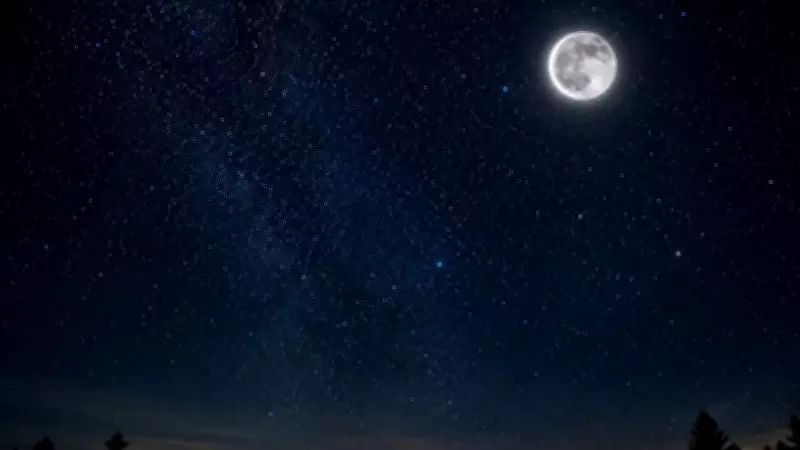
This month, the evening sky presents an unusual flurry of activity within a relatively short timeframe. Bright planets gather low in the west after sunset, the moon engages in several striking encounters, and the June solstice approaches. For anyone who enjoys stepping outdoors after dark, the coming weeks offer a changing view nearly every few nights.
Visible Planets in June: Mercury Makes a Rare Evening Appearance
Mercury is often difficult to spot because it never strays far from the sun in the sky. This month, however, the planet reaches its greatest apparent distance from the sunset glow, placing it in one of its better evening viewing positions of the year. According to NASA, Mercury sits low in the western sky after sunset and can be found beneath the brighter planets Venus and Jupiter. The three worlds form a loose line during mid-June, making the elusive planet easier to locate before it gradually disappears back into the evening twilight later in the month. The opportunity is fairly short-lived. Mercury sinks lower with each passing evening, becoming fainter and harder to distinguish from the bright horizon.
June Night Sky: Crescent Moon Meets Venus, Jupiter, and Mercury
The most photogenic evenings of the month may arrive around June 16 and 17. During those nights, a delicate waxing crescent moon passes through the same part of the sky occupied by Venus, Jupiter, and Mercury. According to EarthSky, the moon will sit low in the west shortly after sunset, creating a compact grouping of bright objects against the fading twilight. Observers using binoculars may also notice earthshine, the faint illumination of the moon's dark side caused by sunlight reflecting from Earth. A few days later, the moon continues its journey through the zodiac, appearing near Regulus, the brightest star in the constellation Leo. The changing positions from one evening to the next offer an easy reminder of how quickly the moon moves across the sky compared with the planets and stars.

June Solstice 2026: When the Longest Day of the Year Arrives
According to NASA, the June solstice arrives on June 21 and represents the longest day and shortest night of the year across the Northern Hemisphere. South of the equator, the situation is reversed, with the shortest day and longest night occurring at the same moment. As per EarthSky, the exact solstice takes place at 8:25 UTC on June 21. The event occurs because Earth's axis remains tilted as the planet travels around the sun, causing different regions to receive varying amounts of sunlight during the year. Although the solstice is often associated with summer in the north, it is less a beginning than a marker along Earth's annual cycle. After this point, daylight hours gradually begin to shorten again, even though the warmest weeks of the season still lie ahead.
Strawberry Moon 2026: When and Where to See June's Full Moon
The moon continues to dominate the late-June sky as it grows toward full phase. During June 22 and 23, it appears near Spica, the brightest star in Virgo. A few nights later, it passes close to Antares, the reddish star that marks the heart of Scorpius. According to EarthSky, the full Strawberry Moon arrives on June 29. It rises near the star pattern known as the Teapot in Sagittarius, although the moon's brightness will largely wash out the surrounding stars. June's sky offers more than planets and moonlight. EarthSky notes that familiar northern constellations such as Boötes, Hercules, and Ursa Major remain well placed for evening viewing. Bright orange Arcturus stands high overhead, while the Big Dipper continues to serve as a useful guide for finding Polaris, the North Star. The month ends much as it began, with plenty to look at and a sky that changes noticeably from one week to the next. For those willing to spend a few minutes outdoors after sunset or before dawn, June provides a steady stream of celestial landmarks worth following.

About the Author
The TOI Science Desk stands as an inquisitive team of journalists, ceaselessly delving into the realms of discovery to curate a captivating collection of news, features, and articles from the vast and ever-evolving world of science for the readers of The Times of India. Consider us your scientific companion, delivering a daily dose of wonder and enlightenment. Whether it's the intricacies of genetic engineering, the marvels of space exploration, or the latest in artificial intelligence, the TOI Science Desk ensures you stay connected to the pulse of the scientific world. At the TOI Science Desk, we are not just reporters; we are storytellers of scientific narratives. We are committed to demystifying the intricacies of science, making it accessible and engaging for readers of all backgrounds. Join us as we craft knowledge with precision and passion, bringing you on a journey where the mysteries of the universe unfold with every word.