

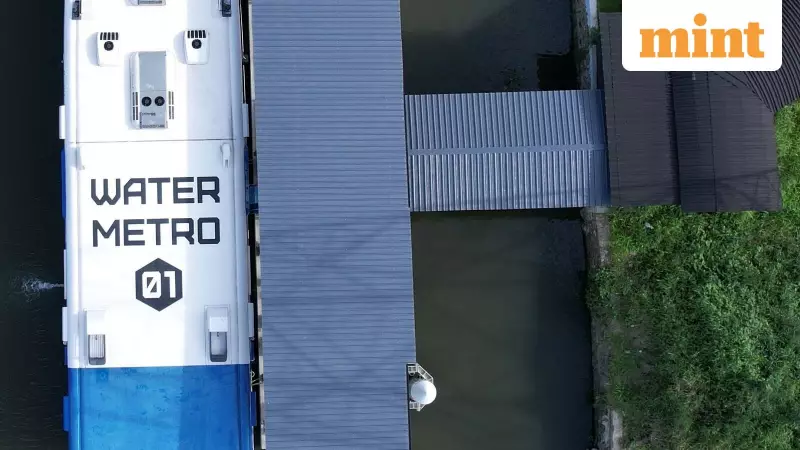
The successful launch and operation of Kochi's modern Water Metro is setting a new course for urban transportation across India. This pioneering project, featuring state-of-the-art electric boats, has become a national blueprint, prompting feasibility studies in 17 locations across 12 states, from Srinagar to Kollam and Mumbai to Guwahati.
From Kochi's Backwaters to a National Blueprint
For residents like Neema Veliyath on Vypin Island, the Water Metro has been transformative. Before its 2023 launch, access to the mainland was limited to crowded ferries or a slow road journey. Now, her homestay guests enjoy a scenic, safe, and eco-friendly arrival. This revival of water-based transit in Kochi, where boats were once central to life, has captured national attention.
Inspired by this success, the Inland Waterways Authority of India (IWAI) has enlisted Kochi Metro Rail Ltd (KMRL) to conduct techno-feasibility studies nationwide. The goal is to replicate a system that offers metro-like discipline, frequency, and safety on water. In cities like Mumbai and Goa, the process is already advancing to the planning stage.

The Cost Advantage and Ambitious Plans
A key driver for this expansion is the compelling cost benefit. KMRL Managing Director Loknath Behera highlights that a 75-km water metro network costs roughly ₹1,500 crore, a mere fraction of the ₹15,000 crore needed for a similar-length elevated rail metro. This is because water metros utilize existing waterways, requiring only terminals, pontoons, and boats, avoiding massive land acquisition and infrastructure.
Mumbai's proposed 'Amchi Mumbai Water Metro' is particularly ambitious. It plans to cover nearly 200 nautical miles with over 30 routes along the western waterfront and eastern creeks, linking areas from Versova to the upcoming Navi Mumbai airport. Similarly, Goa's plan envisions turning its rivers into a continuous corridor connecting northern and southern population and tourism hubs.
Navigating Choppy Waters: Challenges Ahead
Despite the enthusiasm, significant hurdles remain. A primary concern is limited boat-building capacity. Kochi itself awaits more of its 53 planned vessels, with only 20 currently operational. The cost per electric-hybrid boat has also risen from ₹8 crore to about ₹13 crore.
Experts like Sharif Qamar of TERI warn against treating water metros as mere showpieces. Each city's unique hydrology—perennial rivers, tidal movements, or the need for constant dredging—will dictate feasibility. The IWAI's own reports note that many of India's waterways lack year-round navigability due to depth and infrastructure issues.
Currently, in Kochi, over 80% of riders are tourists, indicating the system has yet to mature into a commuter-heavy network that significantly reduces road congestion. Full local impact awaits more boats and the activation of all planned routes.
The Future: Hydrogen on the Horizon
Looking ahead, the next wave of vessels may be powered by hydrogen. Cochin Shipyard has already built India's first hydrogen fuel-cell ferry, which underwent trials in Varanasi. While currently expensive at ₹18 crore, this technology promises faster refuelling and longer range. Behera envisions hydrogen boats joining Kochi's fleet by 2030, especially as India's National Green Hydrogen Mission develops the supply chain.
If the ongoing studies conclude by year-end and approvals are swift, IWAI estimates a realistic timeline for a pilot corridor outside Kochi could be 2027-28. The journey to redefine urban mobility in India's congested cities has set sail, with Kochi firmly at the helm.






