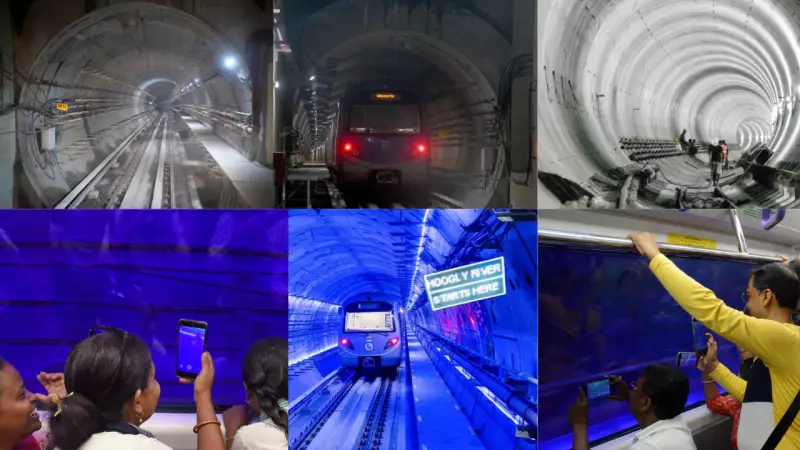
Picture gliding smoothly beneath the mighty Hooghly River in an air-conditioned metro train, turning a grueling hour-long commute into a matter of minutes. This is no longer a futuristic dream but a daily reality for residents of Kolkata, thanks to the operational East-West Metro, also known as the Green Line, the city's second metro corridor.
An Engineering Marvel Beneath the Hooghly
The 17-kilometer East-West Metro stretches from Sector V in Salt Lake on the eastern bank to Howrah Maidan on the western side. Its crown jewel is a 520-meter underwater tunnel beneath the Hooghly River, marking India's first transportation tunnel of its kind. Trains run approximately 16 meters below the riverbed, while the Howrah station on this line is now the country's deepest, built around 30 meters underground.
This ambitious project took over a decade to complete, with the river tunnelling phase finished in a record 67 days in 2017. Engineers battled soft, unpredictable alluvial soil and constructed waterproof tunnel linings designed to last for more than 120 years. The construction in central Kolkata, particularly Bowbazar, faced major hurdles like ground subsidence and water ingress, causing significant delays.

From Traffic Snarls to 45-Second River Crossing
After years of construction and testing, the East-West Metro opened for full commercial service in March 2024. The impact was immediate and profound. The underwater journey itself takes a mere 45 seconds. In contrast, crossing the Howrah Bridge by bus could take anywhere from 15-20 minutes during rush hour to over an hour during political rallies. The metro trip from Howrah Maidan to Esplanade now takes about eight minutes, a route that would demand a minimum of 30-40 minutes by road.
Within the first 15 days of operation, the Esplanade-Howrah Maidan stretch saw an average of 53,570 daily passengers, effectively removing hundreds of bus trips from congested city roads. On its inaugural public day, over 70,000 passengers experienced the under-river section.
Reshaping Kolkata's Urban Rhythm and Geography
The Green Line has fundamentally altered daily life for lakhs of commuters. It seamlessly connects the twin cities of Kolkata and Howrah, linking residential areas with major IT hubs in Salt Lake, business districts, and the immensely busy Howrah and Sealdah railway stations. For suburban commuters arriving at Howrah Station, the direct interchange to the metro offers a welcome escape from crowded bus stands.
"Howrah and Kolkata have always been twin cities, but crossing the Hooghly was a pain. The East-West Metro has changed that — Howrah now truly feels like a twin city," said Ruby Saha, a Howrah resident.
Beyond convenience, the metro addresses critical urban challenges by reducing traffic congestion, lowering air pollution, and providing a sustainable mass transit option. The line intersects with the older North-South Blue Line at Esplanade, creating an integrated network. Interestingly, the idea for an underwater railway in Kolkata is not new; British engineer Sir Harley Dalrymple-Hay first drafted plans for it as far back as 1921.
While the metro's success has increased passenger load on the older Blue Line, leading to some overcrowding during peak hours, its role in transforming Kolkata's daily map is undeniable. Today, the East-West Metro is more than just a transport line; it is a vital part of the city's new rhythm, making commuting faster, more comfortable, and predictable for hundreds of thousands.