

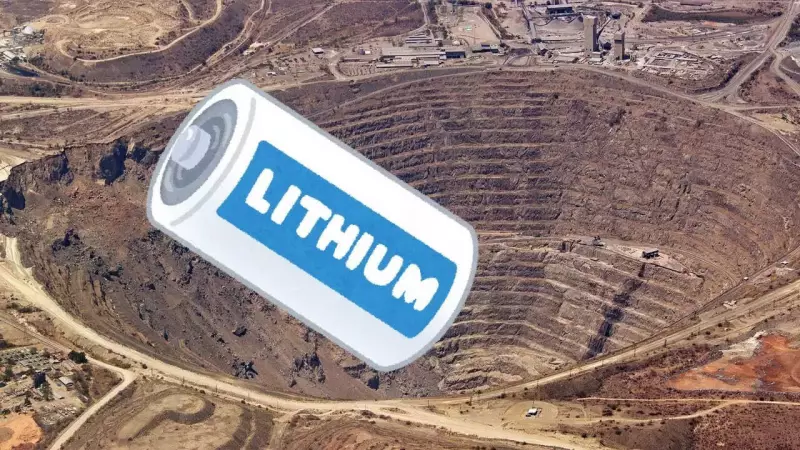
For most of us, it's a familiar, almost unconscious ritual. The phone screen flashes a warning red. The hand instinctively reaches for the charger. At the heart of this daily habit sits lithium, the silent powerhouse of modern life. It fuels our mornings, commutes, work, and entertainment, yet remains an invisible commodity, tucked away in sleek devices. It feels endless, but it is not. This gap between our total reliance and its distant, fragile origins is where a quiet concern begins to form.
The Fragile Journey: Where Does Our Lithium Come From?
Lithium is not scattered evenly across the globe. It is found concentrated in specific, often arid and remote landscapes. The major sources are the vast salt flats, or salars, of South America, particularly in the 'Lithium Triangle' of Chile, Argentina, and Bolivia. The other primary source is hard-rock mining, predominantly in Australia. While geological surveys indicate there is a significant quantity of lithium in the ground, the real challenge is access and supply chain fragility.
Production is dominated by a handful of countries. This concentration creates vulnerability; any shift in policy, export controls, or geopolitical tensions can quickly tighten global supply. The companies that extract and process lithium often operate across complex international borders, adding layers of logistical and political uncertainty. So, while the metal itself may be abundant, its journey from a remote mine to a battery factory is fraught with quiet risks.

Are We Wasting the 'White Gold'? The Recycling Problem
Despite its critical importance, lithium has a surprisingly short practical life. Single-use batteries are discarded without thought. Even rechargeable lithium-ion batteries in our phones and laptops eventually degrade, lose capacity, and are thrown away. Although battery recycling exists, it currently focuses on recovering more accessible metals like cobalt and nickel. Lithium itself is often left behind as not economically viable to reclaim.
This means to feed our relentless demand for new devices and electric vehicles, fresh lithium must be constantly mined to replace what is effectively lost. This cycle is inefficient and puts continuous pressure on resources and mining communities. The waste remains out of sight until potential shortages start to impact consumers directly through price hikes and scarcity.
What Breaks First? Imagining a World with Less Lithium
If lithium supply were severely disrupted, the impact would be felt first and most acutely in batteries. While existing phones and laptops would function, replacements would become scarce and expensive. The sector that would struggle the most is electric vehicles (EVs), as their large, high-capacity batteries are fundamentally dependent on a steady, massive supply of lithium.
Furthermore, the transition to renewable energy would face a major hurdle. Wind and solar power generation requires large-scale battery storage systems to manage intermittency and store excess energy. Without reliable lithium supplies, stabilising green energy grids becomes significantly harder. The crisis would likely manifest not as a sudden blackout, but as project delays, cost overruns, and missed clean energy targets.
Searching for Alternatives: Sodium and Solid-State Futures
In the search for alternatives, sodium-ion batteries are a promising candidate. Sodium is abundant, cheap, and widely available. Engineers have already developed working sodium-ion batteries. Their main drawback is that they are less energy-dense than lithium-ion, meaning they are bulkier and heavier for the same amount of stored power. For stationary applications like grid storage, where size and weight are less critical, sodium could take a substantial load off lithium demand.
Another frontier is solid-state battery technology. These batteries replace the flammable liquid electrolyte with a solid material, promising greater safety, higher energy density, and longer life. Some designs still use lithium, but more efficiently, while others aim to eliminate it. However, the science is complex, and manufacturing at scale remains a costly challenge. Progress is steady but measured in years, not months.

The Real Fear: Imbalance, Not Exhaustion
The core issue may not be the planet 'running out' of lithium, but rather managing its lifecycle and distribution equitably. Mining has significant environmental footprints, often affecting local water resources and communities. Political decisions can reshape markets overnight. Recycling infrastructure lags far behind consumption. These are the simmering pressures.
Lithium will undoubtedly remain a key part of our technological ecosystem for decades to come, not because its management is perfect, but because alternatives are evolving slowly under the immense pressure of demand. The future may see us using less lithium per device through technological advances, rather than eliminating it entirely. These shifts happen gradually, piece by piece, reshaping our dependence without fanfare.





