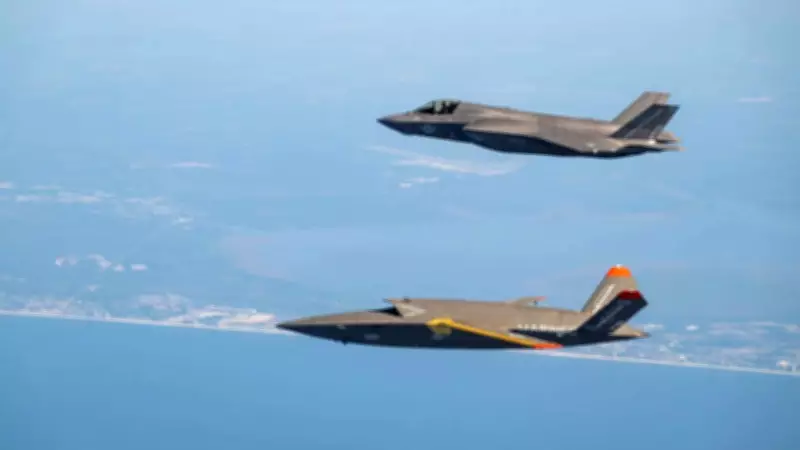
The Rise of Loyal Wingman Drones in Modern Aerial Warfare
Discussions about aerial combat have long centered on advanced fighter jets, stand-off weapons, and air-to-air missiles. However, a significant transformation is underway as Collaborative Combat Aircraft (CCA), commonly known as loyal wingman drones, emerge as the next major innovation in military aviation. These unmanned systems are poised to redefine how wars are fought in the skies, shifting strategies toward greater automation and reduced human risk.
What Are Collaborative Combat Aircraft?
A CCA is an unmanned aircraft designed to operate alongside or ahead of a manned fighter jet, serving to clear or map the airspace in advance. Equipped with Artificial Intelligence (AI), these Unmanned Combat Aerial Vehicles (UCAVs) can function autonomously or semi-autonomously, aiming to boost the combat effectiveness of fighter aircraft while simultaneously enhancing their survivability. By taking on hazardous tasks, they allow manned platforms to remain in safer zones, fundamentally altering risk dynamics in combat scenarios.
Multifaceted Roles and Strategic Advantages
Loyal wingman drones are versatile, capable of performing a wide range of missions. Their roles include:

- Clearing airspace ahead of manned fighters to detect and neutralize threats.
- Conducting electronic warfare to disrupt enemy communications and radar systems.
- Acting as decoys to mislead adversaries and draw fire away from valuable assets.
- Executing bombing runs on high-value targets with precision.
These systems can operate in teams, with different UCAVs assigned specialized functions during a single strike mission. For instance, some drones might be configured for air-to-air combat to secure the area, while others focus on suppressing enemy air defenses or delivering payloads. This coordinated approach enables complex operations without endangering pilot lives, a critical advantage in contested environments.
AI integration further enhances their utility, allowing for pre-programmed missions that can proceed even under heavy jamming from adversaries. Additionally, the relatively low cost of these aircraft makes them more expendable, encouraging air strategists to deploy them in high-risk situations where manned aircraft would be too vulnerable.
Stealth and Global Development Efforts
Universally, CCA designs prioritize stealth capabilities, making them low-observable on radar and ideal for operating in contested airspace. This stealth feature allows them to penetrate enemy defenses while manned fighters maintain a safer distance, thereby reducing overall risks to pilots and ensuring a higher number of operational airframes in the air.
Many nations are actively developing their own loyal wingman projects, reflecting a global shift toward this technology. In India, Hindustan Aeronautics Limited (HAL) is advancing the Combat Air Teaming System (CATS), an unmanned platform intended to collaborate with existing fighters like the Tejas Mk-1A, Su-30 MKI, and Jaguar, as well as future aircraft such as the Tejas Mk-2 and the Advanced Medium Combat Aircraft (AMCA). According to reports, this twin-engine system will utilize the domestically developed PTAE-7 powerplant.
Other notable international projects include:
- The United States' XQ-58 Valkyrie under Project Skyborg.
- China's AVIC Dark Sword initiative.
- France's Neuron project and Germany's Airbus Wingman.
- Russia's Okhotnik, Australia's MQ-28 Ghost Bat, and Turkey's Anka-3.
- Separate developments in Sweden and South Korea.
This widespread investment underscores the strategic importance of loyal wingman drones in modern military planning, as they offer a blend of affordability, versatility, and reduced human casualty potential. As these technologies mature, they are set to become integral components of aerial combat, transforming warfare into a more automated and efficient domain.