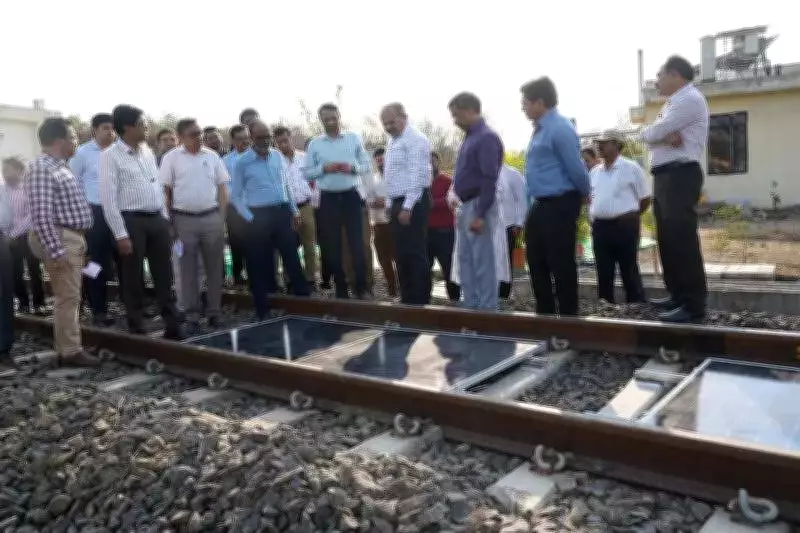
In a pioneering initiative for Indian metro rail systems, Maharashtra Metro Rail Corporation Ltd (MahaMetro) has installed a 50-kWp solar photovoltaic (PV) system between rail tracks at its Hingna depot. This marks a significant step in optimizing space for renewable energy generation.
Pilot Project Details
The pilot project was implemented along a 200-metre stretch within the depot, utilizing otherwise unused space between tracks. The system is expected to generate around 70,000 units of green energy annually, helping reduce nearly 65 tonnes of carbon emissions each year.
Public-Private Partnership Model
Officials stated that the project was executed in a public-private partnership (PPP) mode, with no initial investment by MahaMetro. The installation uses monocrystalline, half-cut solar PV panels supplied and implemented by M/s Greenlife Solutions Pvt Ltd. The generated power will be used for captive consumption, without any net metering mechanism.

Engineering and Safety Considerations
Given its placement between operational tracks, the project required careful engineering and safety planning. Key considerations included managing vibrations caused by train movement, ensuring accessibility for periodic rail track maintenance, and maintaining overhead equipment (OHE) lines.
Future Expansion Plans
MahaMetro officials stated that Nagpur Metro is the first metro rail system in India to implement such a concept of installing solar panels between tracks. The initiative is currently being evaluated as a pilot, and its performance will determine future expansion.
"Since inception, MahaMetro has always prioritised sustainable development through various green initiatives. Through this pilot solar PV project of 50kWp between rail tracks, MahaMetro is exploring options to meet the maximum of its energy requirement from renewable sources for eco-friendly development," an official spokesperson said.
Based on the outcome of the pilot, the project is likely to be scaled up at both Hingna and Mihan depots, and gradually extended across stations and other Metro facilities. Officials indicated that while the current project is small in scale, it opens up new possibilities for integrating renewable energy infrastructure within existing transit systems without requiring additional land.