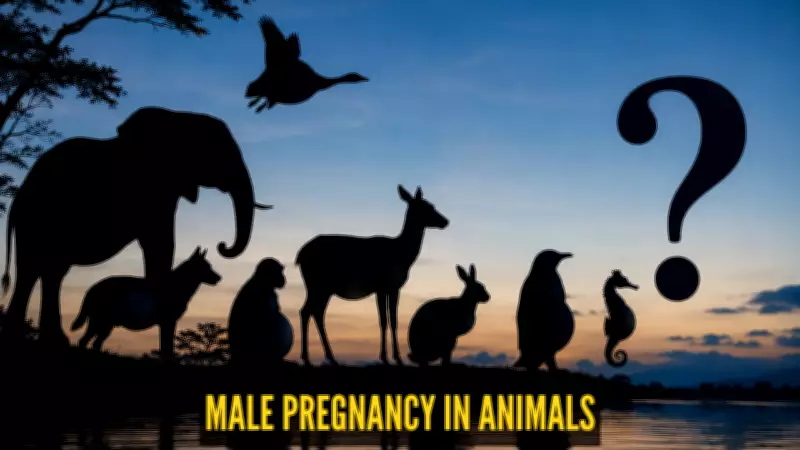
Down in the coral reefs, one of biology's most astonishing phenomena unfolds. Across the animal kingdom, from massive elephants to the smallest insects, the standard rule is that females carry and nurture offspring. However, one unique marine animal completely defies this norm: the male seahorse. Picture a father developing a round, pregnant belly, carrying babies for weeks, and eventually undergoing intense muscle contractions to deliver them. It may sound like science fiction, but researchers confirm it is entirely real.
The Ultimate Dad: Seahorse
Seahorses, along with their close relatives seadragons and pipefish, hold a unique title in the animal kingdom. They are the only known animals on Earth where males become pregnant and give birth. During courtship, the pair engage in a mesmerizing dance, changing colors and swimming together, mirroring each other's every move. When the timing is right, the female transfers her eggs directly into a special brood pouch located on the front of the male's abdomen.
Inside the Brood Pouch
According to scientists, this pouch is not merely a fleshy pocket to hold eggs. Once the eggs are securely inside, the male fertilizes them, and the pouch transforms into a functional womb. Over the next two to four weeks, the father's body works in overdrive. A network of blood vessels supplies oxygen and nutrients to the growing embryos. The male also adjusts the salinity, or salt levels, inside the pouch to match the surrounding seawater, helping the young acclimate before birth.

Delivery Day
When the babies are finally ready, the seahorse father goes into real labor. Wrapping his coiled tail around a sturdy piece of seaweed to brace himself, he rocks back and forth and begins pushing. Strong muscle contractions literally shoot the babies out into the surrounding water. Depending on the species, he may birth dozens, hundreds, or even upwards of a thousand fully formed, tiny seahorses, known as fry. As soon as the grueling delivery ends, the father's job is officially over; the newborns are completely independent from the moment they emerge.
The Evolutionary Logic
Why did evolution set up this system? Experts believe it essentially comes down to efficient teamwork and survival. Producing eggs drains a massive amount of physical energy from the female. By transferring those eggs to her partner for incubation, she is immediately freed to start generating a fresh batch. Thanks to this approach, a single pair of seahorses can produce far more offspring during a breeding season than if the mother had to shoulder both burdens. And they need those high numbers. In the wild, baby seahorses are incredibly vulnerable. Because they are tiny and poor swimmers, only about one in a thousand actually survives to adulthood. By putting reproduction into overdrive, these devoted fathers ensure that at least a handful of their offspring will survive to pass on this bizarre biological tradition.