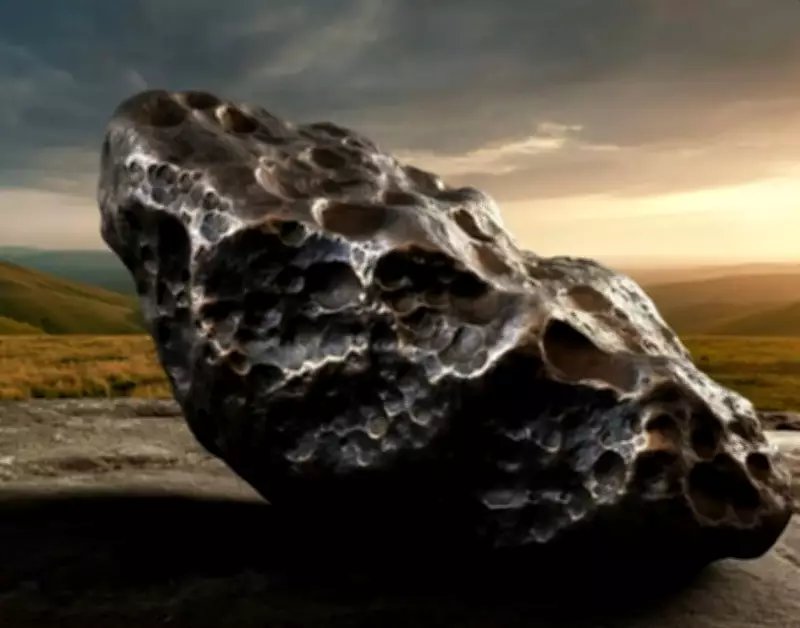
Meteorites are often depicted as small rocks encased behind glass in museum displays. However, some of the largest meteorites ever unearthed resemble trucks more than stones. These colossal chunks of iron and rock fell to Earth thousands or millions of years ago. This list highlights the most massive individually recovered specimens, excluding meteorite showers or fields. Most of the largest surviving extraterrestrial samples are iron meteorites, as they have a greater chance of surviving atmospheric entry and long-term exposure on Earth's surface. The biggest one, named Hoba, was simply too large to ever be moved from its discovery site.
Hoba: The Largest Meteorite Ever Discovered
Namibia's Hoba is considered the largest known meteorite, weighing approximately 60 tons and composed mainly of iron and nickel. Discovered in 1920 on farmland near Grootfontein, it remains at its original location, as recorded by Guinness World Records. Today, Hoba is a protected tourist attraction. Scientists believe it caused minimal damage upon impact because it likely entered the atmosphere at an acute angle and slowed considerably before hitting the ground.
El Chaco: The Giant of Argentina's Campo del Cielo
With an estimated weight of 37 tons, El Chaco is the largest fragment in Argentina's renowned Campo del Cielo meteorite field. Scientists think the parent object disintegrated in space thousands of years ago before crashing to Earth. While the area is littered with meteorite fragments, El Chaco stands out as the largest. According to Britannica, "Campo del Cielo" translates to "Field of the Sky," linking indigenous myths with modern science.

Ahnighito: From Greenland to a Museum
Ahnighito, nicknamed "The Tent" by locals, weighs 31 tons. Originally from Greenland, it is now displayed at the American Museum of Natural History in New York City. Its transportation in the late 19th century was an engineering marvel. Explorer Robert Peary facilitated its shipping by sea and train from the Arctic Circle to New York, where it remains a major attraction. Visitors can stand beneath this massive iron mass.
Armanty: Proof of Iron Meteorite Endurance
The Armanty Meteorite, discovered in China's Xinjiang region, weighs about 28 tons. It is among the largest meteorites found in the 20th century. Like many on this list, it is composed of iron, which experts say is more resilient during atmospheric passage. Studies indicate iron meteorites consist of iron-nickel alloys formed in asteroid cores.
Bacubirito: A Mexican Giant
The Bacubirito meteorite in Sinaloa, Mexico, weighs nearly 22 tons. Though less globally known than Hoba or Ahnighito, it remains one of the largest discovered. Its exceptional size and structure continue to intrigue scientists, offering insights into the early solar system.
Why Iron Meteorites Dominate Large Specimens
Most meteorites burn up in the atmosphere, but iron meteorites are more likely to survive due to their durability. They withstand atmospheric re-entry better than stone meteorites, explaining why many of the largest specimens are iron-rich.
Hoba's Unique History
Unlike most meteorites kept in museums or sliced for study, Hoba has never been moved from its landing site due to its immense size. Visitors see the actual object that fell from space, not a replica or polished fragment.