

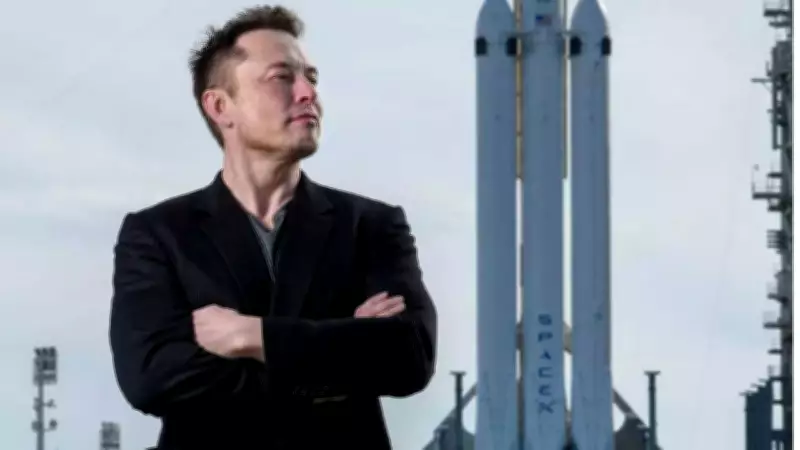
SpaceX CEO Elon Musk Forecasts Revolutionary Launch Cadence for Starship
Elon Musk, the chief executive of SpaceX, has made a bold prediction that the company's next-generation Starship rocket could achieve launch frequencies as rapid as once every hour within the next three years. This statement emerged during a recent discussion on the social media platform X, where Musk addressed SpaceX's escalating launch schedule projected for 2026.
Current Launch Pace Sets the Stage for Future Expansion
SpaceX has already scheduled seven Falcon 9 rocket launches from sites in California and Florida before the conclusion of February, indicating a consistent increase in operational tempo. Musk suggested that this current pace will appear relatively modest when compared to the ambitious capabilities envisioned for the Starship system. He directly linked this forecast to the expanding requirements for satellite deployment and long-term plans for developing space-based infrastructure.
These remarks follow the recent merger of SpaceX and xAI, where Musk identified launch demand as a critical driver propelling Starship's ongoing development. A post on X highlighted that SpaceX is currently conducting more launches than many of its competitors this year, with Falcon 9 missions continuing from both the East and West coasts of the United States, including flights from Cape Canaveral and Vandenberg Space Force Base.

Musk Envisions "Really Nutty" Launch Frequency
In his response to the current launch statistics, Musk directed attention toward the future rather than present numbers. He wrote that operations would become "really nutty" once the Starship begins achieving hourly launches. Although brief, this comment underscores how central launch frequency is to SpaceX's overarching strategic vision.
Starship Positioned for Massive Payload Capacity
The Starship, developed by SpaceX, is engineered to carry payloads of up to 200 tonnes per flight. Musk has elaborated that with hourly launch capabilities, this vehicle could transport millions of tonnes to orbit annually. Such immense capacity would be instrumental in supporting large-scale satellite networks and potential future projects like space-based data centers.
Following the SpaceX and xAI merger, Musk emphasized that the demand to place vast constellations of satellites into orbit will act as a forcing function, accelerating Starship's development. He described satellite launches as a key motivator for enhancing the rocket's reliability and reducing turnaround times between missions.
The underlying concept hinges on achieving unprecedented scale—more frequent launches, heavier payloads, and significantly shorter intervals between flights. While the company continues testing the Starship system, the Falcon 9 remains the primary workhorse for current missions. However, Musk suggests that Starship is fundamentally designed to revolutionize the entire rhythm of space access.






