

NASA's Artemis II Moon Mission: Historic Launch 48 Hours Away
Over five decades since the final Apollo mission, NASA stands on the brink of a monumental achievement. The Artemis II mission is now merely 48 hours from launch, poised to return human explorers to the vicinity of the moon. This historic 10-day journey represents the inaugural crewed flight of the formidable Space Launch System (SLS) rocket and the advanced Orion spacecraft, carrying four trailblazing astronauts on a circumlunar voyage.
The Journey to Launch: From Foundation to Final Countdown
This photographic narrative chronicles the arduous path to this pivotal moment. It traces the evolution from the uncrewed Artemis I mission in 2022, which laid the critical groundwork, through the intense survival training of the astronaut crews, to the complex hardware integration finalized in early 2026. The following images unveil the development of the world's most powerful rocket and the meticulous preparation of a diverse crew, all working toward the goal of establishing a permanent human presence on the lunar surface.
Liftoff of Artemis I: Proving the Rocket
On November 16, 2022, at 1:49 AM EST, NASA achieved a crucial milestone. The Space Launch System Rocket and Orion spacecraft ignited for the first time on Launch Pad 39B at Kennedy Space Center. This uncrewed demonstration mission, Artemis I, successfully validated the capability of this historic, most powerful rocket to propel the Orion capsule toward the moon.

Orion's Return: Testing the Heat Shield
After traveling over 8,000 nautical miles and reaching speeds exceeding 12,000 nautical miles, the Orion capsule concluded its 25.5-day uncrewed mission on December 11, 2022. It re-entered Earth's atmosphere and splashed down in the Pacific Ocean, setting a record for an uncrewed vehicle. A primary objective was the rigorous evaluation of the spacecraft's heat shield, a vital component for the safety of future crewed missions like Artemis II.
Crew Training: Preparing for Every Scenario
Artemis II Commander Reid Wiseman underwent extensive water survival training at NASA's Neutral Buoyancy Laboratory through 2024. This training prepared him for Orion's high-speed ocean landing and the critical procedures for stabilizing the crew in a raft after exiting the spacecraft, ensuring readiness for any contingency.
Final Integration and Rollout
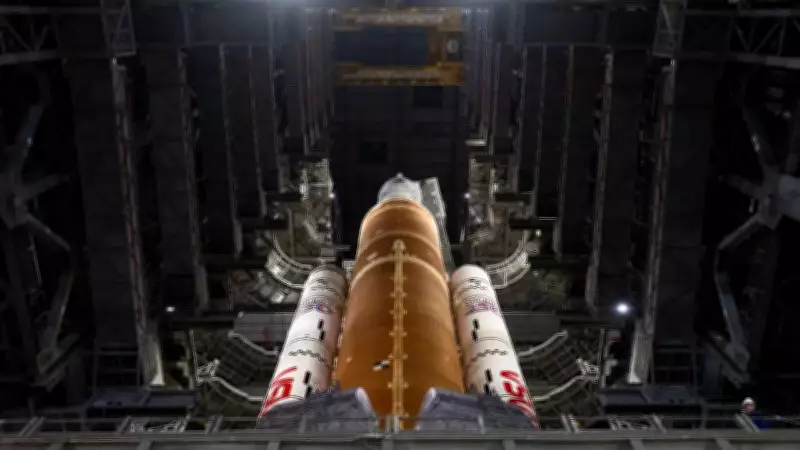
On January 16, 2026, the colossal 322-foot-tall Space Launch System Rocket and Orion spacecraft were fully integrated inside the Vehicle Assembly Building (VAB). Teams completed final checks on the core stage and booster engines before the historic rollout to Launch Pad 39B, setting the stage for the April 1st mission. Media personnel arrived in force to capture the event, setting up remote cameras to document the journey of the massive rocket to the pad.
Ready on the Pad
Following its final rollout on March 20, the Artemis II SLS rocket and Orion spacecraft now stand majestically on the launch pad at Kennedy Space Center. The rocket has successfully completed its final ground tests and is currently fueled and prepared for the Wednesday launch, with all systems loaded for its journey to the moon.
The Teams Behind the Mission
On January 17, the prime crew members—Reid Wiseman, Victor Glover, Christina Koch, and Jeremy Hansen—joined their backups, Andre Douglas and Jenni Gibbons, for a group photo. This integrated team worked collaboratively to review mission procedures exhaustively, ensuring both prime and backup crews were fully trained ahead of their arrival at the Cape this week.
Suited for Space: The Final Dress Rehearsal
The Artemis II crew conducted vital training inside an Orion mock-up, wearing the bright orange Orion Crew Survival System (OCSS) spacesuits. The OCSS is engineered to provide essential pressure and oxygen protection during the intense phases of launch and re-entry. This equipment is absolutely critical for safeguarding the crew throughout their upcoming ten-day lunar flight.
As the countdown clock ticks, NASA's Artemis II mission symbolizes a giant leap forward in human space exploration, bridging a half-century gap and opening a new chapter in our journey to the moon and beyond.






