NASA's Artemis II Mission Set for Historic Moon Voyage in April 2026
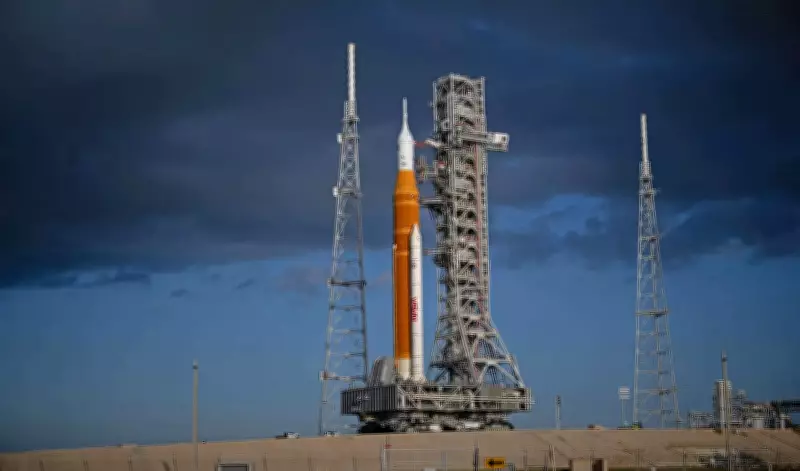
With only a week remaining until liftoff, anticipation is reaching a fever pitch for NASA's upcoming Artemis II mission, which is designed to send humans on a journey around the Moon for the first time in over half a century. Targeting a launch window opening no earlier than April 1, 2026, this landmark event in space travel represents a bold leap toward establishing a sustained human presence beyond Earth, with implications for future lunar bases and Mars exploration.
Artemis II Launch Details and Timeline
The launch is scheduled from Kennedy Space Center's Launch Complex 39B, utilizing NASA's most powerful rocket to date, the Space Launch System (SLS). While the exact date depends on weather conditions and final mission preparedness, the mission is expected to last approximately 10 days. This will mark the first crewed mission to the Moon since Apollo 17 in 1972, making it a historic venture into deep space that could redefine humanity's cosmic ambitions.
Crew Composition and Technological Innovations
At the heart of Artemis II is a blend of cutting-edge technology and international collaboration. The four-astronaut crew includes:

- Reid Wiseman as Commander
- Victor Glover as Pilot, who will be the first person of color to travel to the Moon
- Christina Koch as Mission Specialist, who will be the first woman to make this journey
- Jeremy Hansen from the Canadian Space Agency, the first non-American to venture toward the Moon
The astronauts will travel aboard the Orion spacecraft, designed to sustain human life in deep space, propelled by the formidable SLS rocket. This mission is not merely symbolic; it serves as a critical test bed for systems essential to long-duration spaceflight, including life support, deep space navigation, and radiation exposure handling.
Final Preparations and Mission Significance
In recent weeks, NASA engineers have completed vital repairs, such as fixing issues with the helium system, allowing the rocket to return to the launch pad for final checks. The rollout process itself is a meticulous endeavor, covering nearly four miles at less than one mile per hour, underscoring the mission's magnitude. NASA is also monitoring environmental factors like solar radiation to ensure astronaut safety.
Artemis II symbolizes a renewed era of human ambition in space exploration. By testing advanced spacecraft and paving the way for lunar bases and Mars missions, this launch could herald a new chapter in space history. As the countdown enters its final days, it represents more than just a rocket launch—it is a potential giant leap for mankind, echoing the spirit of past Apollo missions while looking toward a future of interplanetary discovery.