

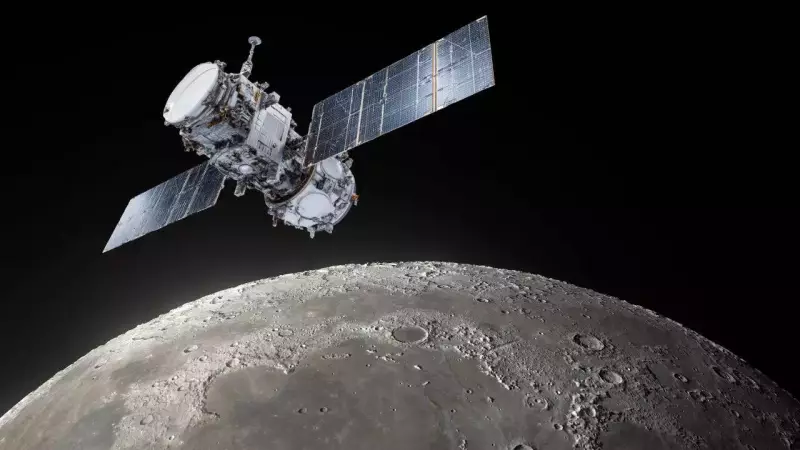
For decades, the final moments of a Moon landing appeared serene from afar: a controlled descent, a soft touchdown, and then stillness. This familiar calm, however, has always masked a brief but turbulent dance of dust and soil just above the lunar surface—a chaotic interaction largely unseen, until now.
The Mission That Changed The View
This historic visual record was captured not by a flagship NASA mission, but through the agency's Commercial Lunar Payload Services (CLPS) initiative. The star of the show was Firefly Aerospace's Blue Ghost lander, which successfully touched down in the Mare Crisium region on March 2. While the landing site itself is notable, the real breakthrough was in the observation.
For the first time, a specialized camera system named SCALPSS 1.1 (Stereo Cameras for Lunar Plume Surface Studies) documented the entire event. Unlike a single camera, SCALPSS employed a network of six cameras working in unison. This setup provided an unprecedented, detailed visual account of how the lander's engine exhaust violently interacted with the Moon's surface, a phenomenon previous missions had failed to capture with such clarity.

Why Studying Engine Plumes is Critical
When a spacecraft nears the lunar surface, its engines fire downwards to slow its descent. This isn't just about thrust; it's a powerful physical interaction with the ground. The SCALPSS images reveal lunar regolith—dust, soil, and tiny rocks—being violently lifted and ejected radially outward.
This matters profoundly for the future of lunar exploration. In the airless, low-gravity environment of the Moon, this ejected material can travel far and fast. It poses significant risks:
- It can sandblast and damage nearby hardware or habitats.
- It can coat sensitive scientific instruments, rendering them useless.
- With multiple missions planned for the same regions (like the lunar south pole for Artemis), one landing could jeopardize another.
Understanding the plume's behavior is no longer academic; it's an engineering necessity for sustainable lunar presence.
A Meter-by-Meter Descent into Chaos
The SCALPSS sequence begins its analysis from about 28 meters (92 feet) above the surface. Initially, the terrain appears pristine and undisturbed. The change starts at approximately 15 meters (49 feet), as the engine's force begins to stir the top layer of regolith.
The interaction intensifies dramatically as the Blue Ghost lander closes the final meters. By the moment of touchdown, the zone directly beneath the vehicle is utterly transformed into a storm of particulate matter. Only after engine cutoff does the dust settle, the lander makes its final slight adjustments, and the ground becomes visible again. This "brief window of chaos" is precisely the data scientists have longed to acquire.
The Technology Behind the Images
So, how does SCALPSS work? The version 1.1 unit uses a clever combination of lenses: four wide-angle cameras to capture broad views near the ground and two with longer focal lengths that begin imaging from higher altitudes. This configuration allows researchers to employ stereo photogrammetry.
By overlapping images from different angles, they can construct detailed 3D maps of the landing site before and after the event. This enables precise measurement of how much material was displaced and exactly where it landed, turning qualitative observations into quantitative engineering data.
The instrument is still active on the Moon, continuing to observe the landing site as sunlight angles change during the long lunar day. The team also aims to study how dust behaves as the extreme cold of lunar night approaches.
Implications for Artemis and Beyond
The Moon's landscape is set to get busier. With numerous robotic CLPS deliveries and the crewed Artemis missions on the horizon, managing the effects of landing plumes is paramount. The data from SCALPSS provides a foundational understanding that will:

- Help engineers design safer landing pads and blast shields.
- Inform regulations on safe distances between landing zones and surface assets.
- Guide the placement of critical infrastructure for a future lunar base.
The raw images are expected to be released to the global scientific community via NASA's Planetary Data System within six months, allowing for independent analysis and further discovery.
The next step is already in progress. An upgraded SCALPSS system is being prepared for its flight aboard Blue Origin's Blue Moon lander, scheduled for later this year. Each mission adds another layer to our understanding. The Moon itself may not change often, but our ability to see and comprehend its subtle interactions is undergoing a quiet revolution, one detailed image at a time.





