

Inside NASA's Orion Capsule: The Cramped Reality of Moon Mission Living
Space exploration has captivated humanity for centuries, but the actual experience of living in space bears little resemblance to the glamorous depictions often seen in films. NASA's Artemis program, which aims to return humans to the Moon, utilizes the Orion spacecraft—a meticulously designed vessel that serves as both home and workplace for astronauts during their deep-space journeys.
The Orion Crew Module: A Compact Home in the Void
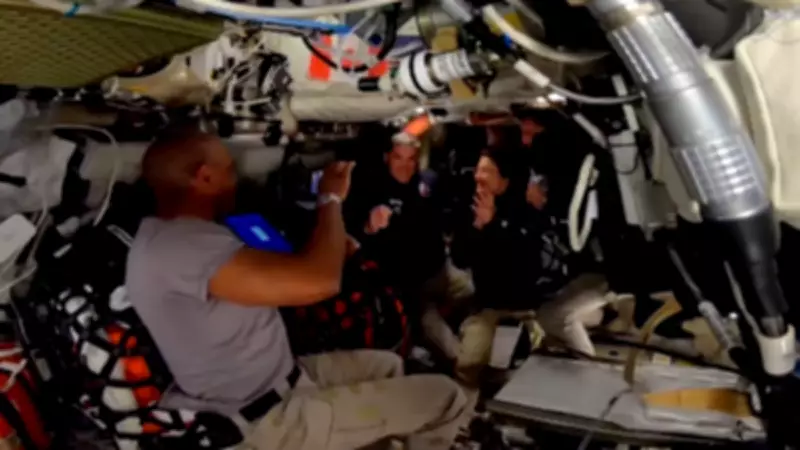
The Canadian Space Agency has provided detailed insights into the Orion spacecraft's interior, revealing that the crew module represents the heart of the vessel. This pressurized compartment is where astronauts will reside and conduct their duties throughout the entire mission to the Moon and back. NASA describes it as the essential living and working space for crew members traveling millions of kilometers from Earth.
Despite its critical role, the Orion capsule offers surprisingly limited accommodations. With an internal volume of just 330 cubic feet—approximately equivalent to the space inside two minivans—it must accommodate up to four crew members for extended periods of up to 21 days. The design prioritizes efficiency and survival in the extreme conditions of deep space over comfort.

Daily Life Aboard Orion: Sleeping, Eating, and Working
Life inside the Orion spacecraft can best be described as advanced space camping. There are no separate cabins or private quarters; instead, astronauts share a single multipurpose area for all activities. During launch and landing, crew members are secured in specially designed seats. Once in orbit, some of these seats can be repositioned to create additional cabin space.
Sleeping arrangements are particularly basic. Astronauts use sleeping bags that are attached to walls or other surfaces to prevent floating during rest periods. Even these sleeping bags and accompanying window shades were developed by specialists following strict NASA engineering requirements.
Meal preparation involves heating pre-packaged food before consumption. The spacecraft includes a hygiene block with a specialized toilet and exercise equipment to maintain physical fitness in the microgravity environment. All operational tasks are managed through advanced digital interfaces, with screens displaying critical information and enabling efficient mission execution.
Life Support and Safety Systems: Surviving Deep Space
The most crucial aspect of living aboard Orion involves its sophisticated life-support systems. These systems carefully regulate:
- Air pressure and oxygen levels
- Temperature and humidity
- Carbon dioxide concentrations
Beyond comfort considerations, safety remains paramount in the spacecraft's design. The capsule provides substantial protection against both micrometeoroid impacts and radiation hazards inherent to space travel. In the event of a solar storm, astronauts can take shelter within the onboard storage facilities.
All essential resources—including water, power, and oxygen—are supplied by the European Service Module attached to the crew module's underside. This integrated system ensures the spacecraft can sustain human life throughout the demanding lunar journey.
The Orion spacecraft represents a remarkable engineering achievement that balances extreme constraints with human survival requirements. As NASA prepares for upcoming Artemis missions, understanding these living conditions provides crucial insight into the realities of deep-space exploration beyond Earth's orbit.






