

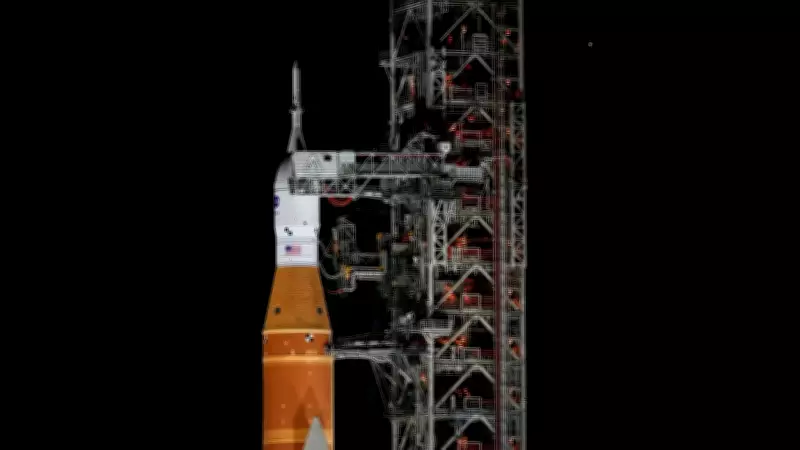
NASA Announces March 6 as Earliest Target for Artemis II Crewed Moon Mission
In a significant development for space exploration, NASA has officially designated March 6 as the earliest potential launch date for the historic Artemis II mission. This will be the first crewed flight to journey around the Moon in more than five decades, marking a pivotal moment in America's return to lunar exploration.
Critical Preparations and Timeline Confirmation
Senior NASA official Lori Glaze emphasized that while March 6 is the target, several crucial steps must be completed before the date is finalized. "We need to successfully navigate all of those, but assuming that happens, it puts us in a very good position to target March 6," Glaze stated, as reported by the Associated Press. These steps include additional work at the launch pad and a full dress rehearsal to ensure all systems are operational.
The announcement follows NASA's successful completion of a critical rocket fueling test, which cleared a major hurdle toward a March launch. Administrator Jared Isaacman highlighted that launch teams made "major progress" between the first countdown rehearsal earlier this month—which was halted by hydrogen leaks—and the second test, completed Thursday night without significant leakage.

Overcoming Technical Challenges
NASA faced setbacks earlier when February launch opportunities were scrapped due to hazardous levels of liquid hydrogen leaking during the initial fueling demonstration. Technicians later replaced two faulty seals, paving the way for Thursday's successful rerun. During this test, the countdown reached the planned 29-second mark, demonstrating the effectiveness of the repairs.
Despite this progress, Glaze noted that additional steps remain, including a formal flight readiness review. The agency has a narrow launch window, with just five viable days in March before the mission would be delayed until April, underscoring the importance of timely preparations.
Mission Details and Crew Preparation
NASA plans to send four astronauts on the Artemis II lunar flyby as early as March 6 from Kennedy Space Center. The crew—comprising three Americans and one Canadian—has entered a mandatory two-week health quarantine as of Friday night to preserve launch flexibility and ensure their readiness for the mission.
Commander Reid Wiseman and two crewmates observed Thursday's operation alongside launch controllers, getting a firsthand look at the procedures. The astronauts on this mission will be the first humans to journey toward the Moon since Apollo 17 concluded NASA's original lunar program in 1972, making this a landmark event in space history.
Significance of the Artemis II Mission
Isaacman described the successful test as "a big step toward America’s return to the lunar environment," a sentiment he shared on the social media platform X. The Artemis II mission represents not only a technological achievement but also a symbolic renewal of human exploration beyond Earth's orbit.
As NASA works diligently to meet the March 6 target, the world watches with anticipation. This mission sets the stage for future lunar landings and deeper space exploration, reinforcing NASA's commitment to pushing the boundaries of human knowledge and capability in the cosmos.






