NASA's ISS Retirement Plan Faces Critical Timeline as Private Firms Race Against Time
The future of human presence in low-Earth orbit hangs in the balance as NASA's planning delays create mounting pressure on private companies developing the next generation of space stations. With the International Space Station (ISS) expected to retire in less than five years, the space agency has yet to release detailed requirements for commercial replacements, adding uncertainty to an already tight schedule.
The Aging ISS and NASA's Transition Strategy
The International Space Station, which has hosted astronauts continuously for over two decades, represents one of humanity's greatest engineering achievements in space exploration. However, this aging orbital laboratory is approaching the end of its operational life, with retirement planned within the next five years. NASA's long-term vision involves transitioning from government-operated facilities to commercially developed space stations, allowing the agency to focus resources on ambitious Moon and Mars missions.
This strategic shift aims to maintain continuous human presence in low-Earth orbit while freeing NASA to pursue deeper space exploration goals. Yet, without clear guidance on what future commercial stations must deliver—including specific timelines for supporting long-term human stays—private companies are navigating uncharted territory with limited visibility.

Private Contenders in the Commercial Space Race
Four primary companies have emerged as leading contenders in NASA's commercial space station program: Voyager Technologies, Axiom Space, Blue Origin, and Vast Space. Later this year, NASA is expected to select one or two of these firms for larger contracts under the program's second phase. These agreements will support the development of privately built stations capable of taking over once the ISS is decommissioned.
Industry leaders and lawmakers have expressed concern that further delays in NASA's decision-making could create a dangerous gap between the ISS retirement and operational commercial replacements. Such a scenario might force NASA to extend the ISS's service life beyond current plans, potentially compromising safety and diverting resources from other critical space initiatives.
Vast Space's Haven-1: A Step-by-Step Approach
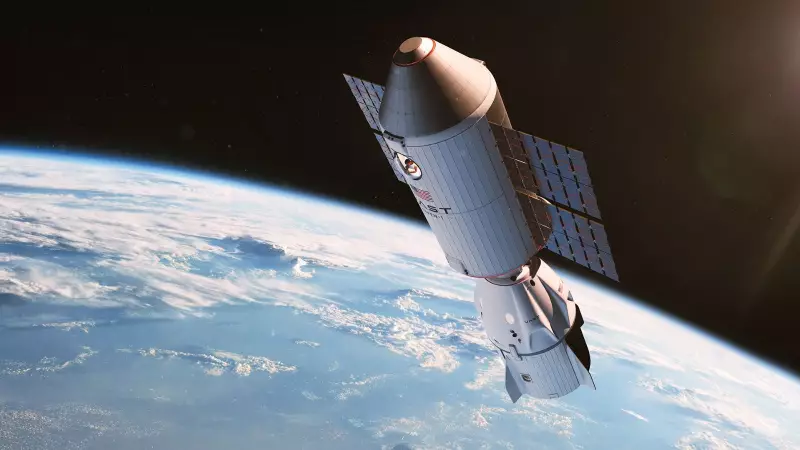
Among the competing companies, Vast Space claims to be furthest along in development with its Haven-1 station. Originally targeting a mid-2026 launch, the timeline has shifted to the first quarter of 2027—a deadline company executives express confidence in meeting while maintaining rigorous safety standards.
Vast Space Chief Executive Max Haot revealed in an interview that the main structure of Haven-1 has already been completed, with significant testing milestones achieved. The station represents a strategic approach, beginning with smaller facilities designed for short-duration missions rather than permanent crews.
Haven-1's development path includes several critical phases:
- Integration of thermal control, propulsion, and avionics systems
- Comprehensive testing campaigns in collaboration with NASA
- Initial uncrewed launch and remote monitoring of pressure control and orientation systems
- Approval process for crewed missions using SpaceX Crew Dragon spacecraft
The station is designed with a three-year operational lifespan, potentially hosting multiple short missions of approximately two weeks each. Vast Space has indicated that discussions are underway with both private individuals and national space agencies regarding future crew assignments.
The Broader Implications for Space Exploration
Vast Space's step-by-step development strategy positions the company favorably as NASA prepares to award its next round of contracts. Company leadership emphasizes that their approach aligns closely with NASA's fundamental need: ensuring no break in human orbital presence following ISS retirement.
Looking beyond Haven-1, Vast Space plans to develop larger follow-up stations building upon the same core systems. This scalable approach demonstrates how private companies are adapting to the uncertain regulatory environment while advancing space station technology.

As NASA weighs its next moves, pressure continues to mount for the agency to announce clear requirements and make timely decisions. The coming months will prove crucial in determining whether commercial space stations can meet the tight timeline or whether the ISS will need extended service beyond current retirement plans.
The race to replace the International Space Station represents more than just technological competition—it symbolizes a fundamental shift in how humanity approaches space exploration, with private enterprise taking increasingly prominent roles in what was once exclusively government territory.