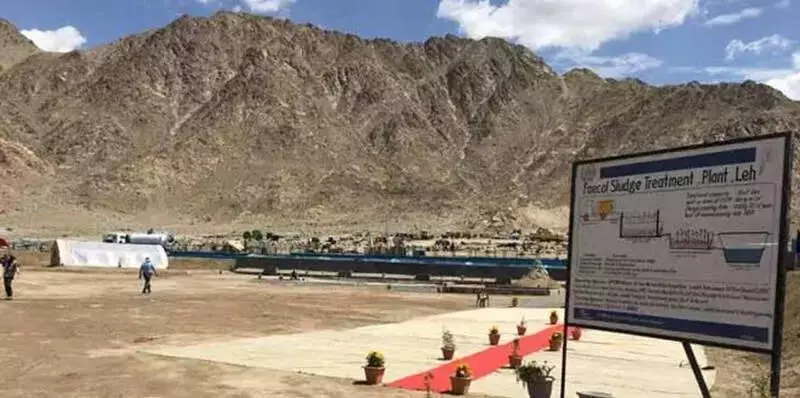
In a significant breakthrough for sustainable agriculture in the Himalayas, the Ladakh Regional Centre of Almora's Govind Ballabh Pant National Institute of Himalayan Environment (GBPNIHE) has secured a national patent. The patent is for its innovative hydroponic farming system that utilizes treated wastewater sourced from faecal sludge treatment plants.
A Sustainable Solution for Fragile Ecosystems
This pioneering technique presents a viable alternative to freshwater, addressing critical challenges in regions like Ladakh. The cold desert faces extremely low rainfall, sub-zero winter temperatures, and a severe scarcity of cultivable land. The system offers a sustainable and scalable pathway to strengthen food security while ensuring the responsible use of precious water resources in these fragile mountain ecosystems.
The research team behind this innovation includes Dr Lalit Giri, Mohammad Hussain, Jigmet Chushkit Angmo, Dr Sandipan Mukherjee, Dr Indra Dutt Bhatt, and Dr Sunil Nautiyal. Dr. I.D. Bhatt, the institute's director, highlighted the project's significance, stating that by integrating wastewater reuse with hydroponic technology, they have set a new benchmark in climate-smart agriculture. This achievement opens new avenues for research, commercialisation, and large-scale regional implementation.

How the Innovative System Works
The system developed by the scientists reuses treated wastewater from a faecal sludge treatment plant located in Bombgarh, Leh. The water undergoes a rigorous multi-stage purification process:
- Primary treatment
- Secondary treatment
- Tertiary treatment, which includes filtration and UV disinfection
Once treated, the water is transported to storage tanks inside a polycarbonate greenhouse. Crop cultivation is then carried out through a drip-based hydroponic system. This setup employs cocopeat grow bags, micro-tube feeder lines, and an aerated water supply system to nourish the plants.
Proven Results and Future Potential
The researchers conducted extensive field trials over two years, yielding highly promising results. Compared to conventional soil-based farming, the hydroponic system using treated wastewater produced:
- Higher yields of crops like tomatoes
- Better growth performance
- Improved nutritional quality
Laboratory analysis revealed that tomatoes grown with this method contained elevated levels of beneficial compounds like lycopene, β-carotene, and antioxidants. Crucially, safety tests confirmed the complete absence of heavy metals or toxic pollutants in both the treated water and the harvested crops, ensuring consumer safety.
This landmark project received support from the Ladakh Ecological Development Group and the Leh Municipal Committee. Financial assistance was provided by the National Mission on Himalayan Studies under the Union Ministry of Environment, Forest and Climate Change. The national patent not only validates the scientific rigor of the work but also paves the way for its adoption across other water-stressed regions, marking a major step forward for ecological sustainability and food security in India's mountainous areas.