

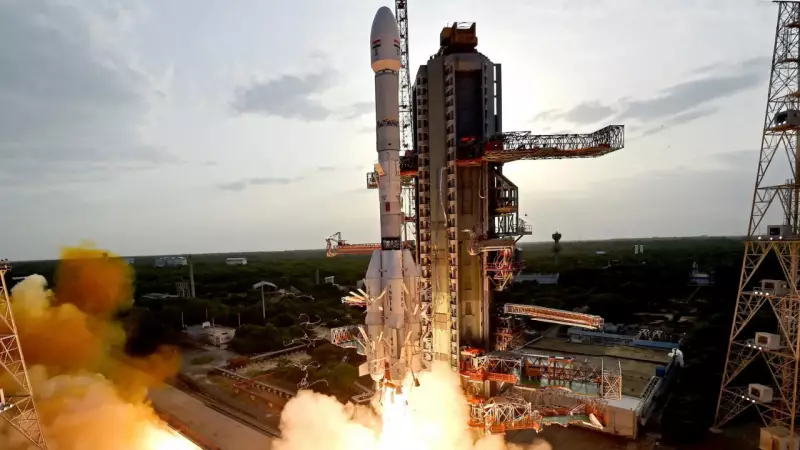
In an era where precise environmental data has become crucial for everything from agricultural planning to disaster mitigation, space technology emerges as a vital solution. The NASA-ISRO Synthetic Aperture Radar (NISAR) mission represents a groundbreaking advancement in Earth observation capabilities. This joint venture between the United States National Aeronautics and Space Administration (NASA) and the Indian Space Research Organisation (ISRO) stands as one of the most sophisticated tools ever developed for monitoring planetary changes.
The Science Behind NISAR's Revolutionary Technology
Akshata Krishnamurthy, a distinguished scientist at NASA's Jet Propulsion Laboratory (JPL) who serves as the science phase lead for the NISAR mission, explains that this observatory represents a significant leap forward in space-based monitoring. NISAR will be the first satellite of its kind to systematically map Earth using dual radar frequencies – specifically L-band and S-band – providing unprecedented detail and consistency in surface measurements.
The mission's primary objective focuses on detecting subtle alterations in Earth's surface that could indicate ecosystem disturbances, ice sheet instability, volcanic activity, or landslide risks. By generating vast quantities of high-quality data, NISAR promises to transform how scientists, policymakers, and communities understand and respond to environmental changes.

Real-World Applications for India and the United States
The practical benefits of NISAR's observations extend across multiple critical sectors. The satellite's ability to monitor forests, wetlands, agricultural fields, and soil moisture will prove instrumental in supporting food and water security initiatives in both nations. Additionally, NISAR data will enhance understanding of geological processes including earthquakes, volcanic activity, landslides, and coastal erosion patterns.
This information will empower local and regional governments to make informed decisions regarding infrastructure protection, real estate planning, and community development strategies. The mission's data will ultimately help protect lives and property while supporting sustainable development goals in both India and the United States.
The Power of International Space Collaboration
Krishnamurthy emphasizes that international partnerships like NISAR leverage complementary capabilities while broadening scientific perspectives. Such collaborations increase access to space-based observations and data while fostering long-term cooperation between nations. These missions help build a more robust knowledge ecosystem and demonstrate how science and engineering can unite countries in addressing global challenges.
The NASA-ISRO partnership exemplifies how shared resources and expertise can accelerate technological advancement while creating mutually beneficial outcomes for both participating nations and the global community.
Innovation Culture at NASA's Jet Propulsion Laboratory
When asked how NASA-JPL maintains its technological edge, Krishnamurthy points to the organization's deeply ingrained culture of innovation. Missions like NISAR emerge from decades of foundational research combined with continuous investment in research and development. The laboratory maintains its forward-looking approach by working across disciplines and collaborating with universities, government agencies, and commercial partners to develop technologies that will support missions decades into the future.
Personal Journey to Space Science Leadership
Krishnamurthy's path to NASA began with childhood curiosity sparked by watching space shuttle launches on television in early 2000s India. This initial fascination evolved into a dedicated pursuit of aerospace engineering, beginning with a mechanical engineering bachelor's degree in India followed by master's and doctoral studies in aerospace engineering in the United States.

Her specialization in space systems and instrument development during her PhD at the Massachusetts Institute of Technology (MIT) included work on two NASA space missions for her doctoral thesis. Years of hands-on research, perseverance, and a clear vision to contribute to missions with real-world impact ultimately led her to NASA JPL, where she now helps lead transformative projects like NISAR.
Future Trends in Earth Observation and Space Exploration
Looking ahead, Krishnamurthy expresses particular excitement about the integration of Earth observations with artificial intelligence (AI) to deliver real-time insights at scale. On the space exploration frontier, she anticipates more interplanetary missions featuring autonomous systems and human-robot collaboration for lunar and Martian exploration.
The NISAR mission exemplifies how international cooperation, advanced technology, and scientific expertise can combine to address pressing global challenges. As Earth's systems continue to change at an accelerating pace, such collaborative efforts will become increasingly vital for sustainable development and planetary stewardship.





